
351 Gees Mill Business Pky N, Conyers, GA 30013
Available 24/7
351 Gees Mill Business Pky N, Conyers, GA 30013
Available 24/7
Tankless Water Heaters
At Conyers Plumbing Co, we provide professional tankless water heater installation, repair, and replacement for homes and businesses throughout Conyers. Tankless systems deliver hot water on demand while helping save space and improve energy efficiency compared with traditional storage tanks.
Tankless water heaters in Conyers, GA are the units we size, clean, vent, and replace for houses, townhomes, and condos when a retrofit is already on the wall or a storage heater is failing. Conyers Plumbing Co handles the drip at a sink, the storage heater, the shutoff that hides in a crawl, and slab piping with one crew that already knows where builders hid the valves on these streets. We help homeowners who want a clear path from the first call through the last temperature check at the far bath.
The same truck also covers emergency plumbing, drain cleaning, pipe repair, fixture installation, garbage disposal repair, and tank-style hot water heater work when a tank is still the better fit. In 30013 we see garage installs on post-1960s slab houses near Interstate 20, and tight utility closets in Olde Town bungalows from the 1840s through the 1940s. Those closets often sit beside original galvanized runs, so we map the shutoff before we touch the heater.
From the first call we tell you what we will test, about how long each step takes, and what you will see in the garage or closet. We test flow, vent draft, meaning the pull of exhaust, and inlet screens before we cut a vent or open a chase. We wipe the work area down, and we are available 24/7 when the unit quits after hours. After the safe checks at the heater, we walk through the failures we see most on these streets.
From the first call to the final check, Conyers Plumbing Co keeps the plumbing service process simple, clear, and focused on solving the problem correctly.
Tell us what’s going on and choose a convenient time for your plumbing repair or service.
We inspect the issue, explain the recommended solution, and complete the necessary plumbing repair or installation.
We test the plumbing system, check our work, and make sure everything is operating properly before we finish.
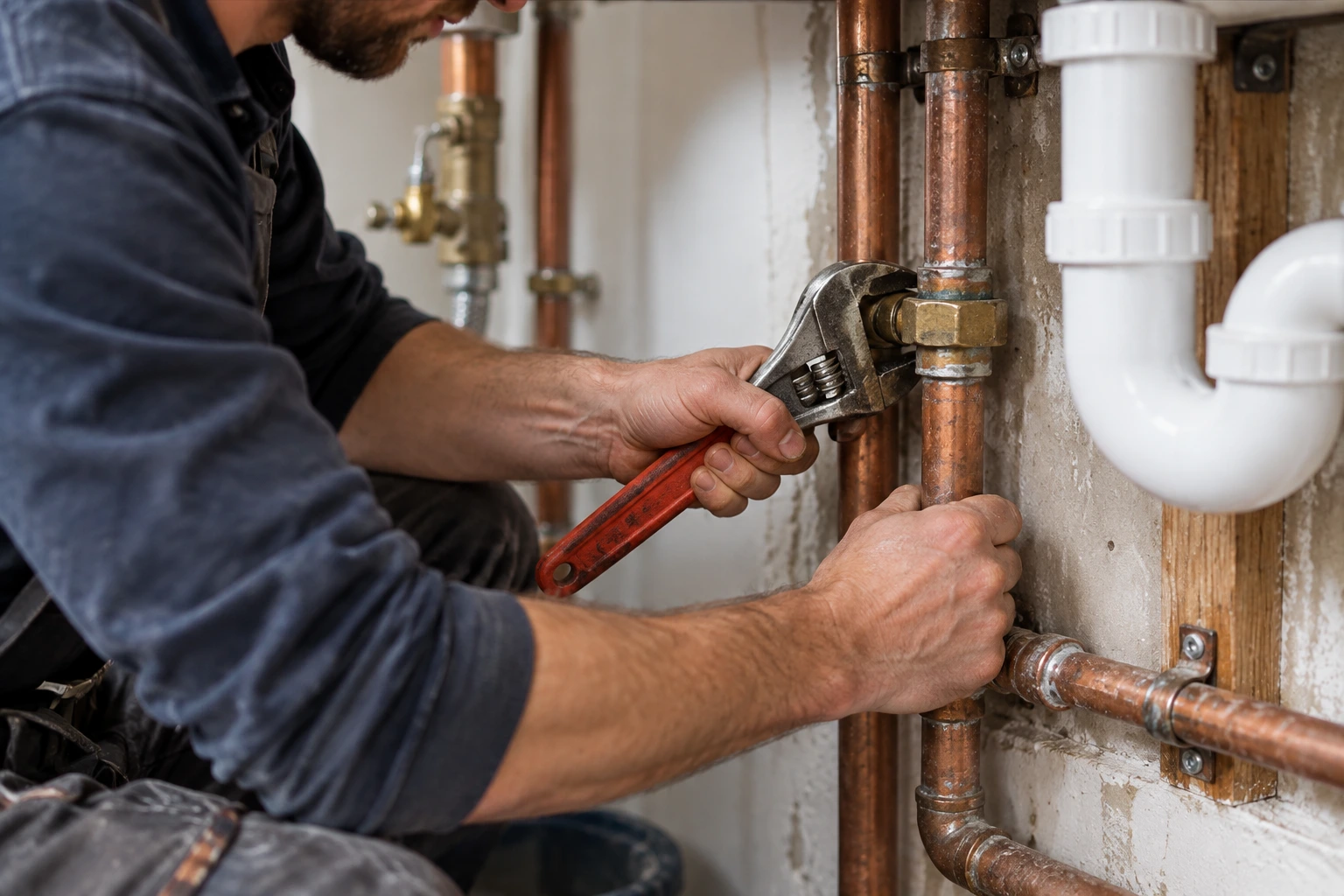
When the unit goes cold, the first minutes at home are about safety and information, not a full repair. We want you to know where water stops, where power stops, and what the display said before it went blank. Those three facts shorten the visit because we do not start from a guessing point. Photograph the code if the screen still lights, then use the checks below and skip any step that feels unsafe.
Most garage units in Conyers sit on an interior wall with isolation valves on the water lines, which stop water at the heater so the rest of the house can stay on, and a breaker in the panel. Follow the cold inlet to those valves and turn them until they stop. Flip the breaker only if the panel is dry and easy to reach, and photograph the display before anyone resets it. Tell us whether the valves moved and whether the breaker was already tripped, because that changes the first test.
These steps are safe for most houses if you can reach the heater without a ladder or standing in water.
Skip anything that opens fuel, vent, or the heat exchanger. Those steps create new leaks and erase the clues we need. The list below is the usual damage we then have to undo.
Minerals in city water bake onto the heat exchanger, the metal block that heats the water, when long showers and summer watering keep the burner in long cycles. Tankless water heater scale buildup shows up as lukewarm water rather than a leak under a tank, so households wait until every bath feels weak. Inlet screens clog first and starve the unit of flow, which looks like a burner fault even when the igniter is fine. Cleaning screens is a short test, and descaling the exchanger is a longer one that we choose after we measure temperature rise.
We pull both screens, measure gallons per minute, and compare temperature rise to the rating plate before we flush. Isolation valves make that cleaning tidy, and we add them when nearby copper or PVC can take them. On West Avenue houses from the 1960s onward those valves usually go in without opening a wall.
When a tankless water heater has no hot water, the house feels it in the first shower, not as a slow drip in a drain pan. On mixed-era streets the usual causes are a tripped breaker, a closed isolation valve, a packed screen, or a fuel line that cannot feed a conversion burner. Many older Conyers houses still have half-inch branches sized for a storage heater, not a high-fire tankless unit. We check that size before we promise a retrofit will light under load.
If you smell gas or suspect a gas leak, go outside immediately and call 911 – this is a serious emergency that needs urgent attention from the gas company. Stay outside until the utility says the house is clear, and do not flip breakers or light the water heater while you wait. We will not ask you to reopen a fitting you already closed.
On the visit we verify flow, then draft, then fuel pressure at the unit, because a starved burner looks like a bad igniter on the screen. A tankless conversion that keeps dropping flame often needs a larger fuel run toward the meter, and that run is a separate decision from hanging the heater. We explain that choice before we unbox a unit so wall openings in the garage are not a surprise.
A tankless water heater flow rate is a ceiling, not a suggestion, and older Conyers fixtures with worn cartridges can sit below the minimum the unit needs to stay lit. When two baths open, or a shower and a kitchen run together, the unit sees too little flow, shuts down, and someone gets a tankless water heater cold water sandwich. That burst of cold feels like a failing heater even when the exchanger is healthy. Houses with long ranch runs make the wait worse because the pipe itself is still full of cooled water.
We measure flow at the unit and at the far bath, then we look at the fixtures themselves. If a cartridge is the bottleneck, fixture installation is the visit that restores the tap, not a larger heater. If the house truly wants two baths at once, we talk about a bigger tankless unit, a small recirc loop, or keeping a tank-style hot water heater for stored volume. The reading, not the wish list, picks that path.
Occasional hard freezes across metro Georgia split tankless heat exchangers that sit in unheated garages, crawl spaces, and exterior-wall bays with water still inside. A tankless water heater freeze protection kit, a dedicated circuit, and draining the unit before a deep cold snap are the usual defenses, and skipping them is how a quiet garage becomes a flood. Crawl bungalows in the Milstead mill village and garage units on later streets share that risk even though the foundations differ. We treat freeze damage as a heater and a piping problem, because the exchanger is only the start of the water that escaped.
We shut the water down, confirm the exchanger is intact or split, and check the vent and condensate for freeze breaks before we talk about a replacement. If the unit is gone, we talk about moving it to a conditioned wall or adding protection that stays powered during a freeze. A new unit in the same cold garage without those steps is how the next cold night repeats the flood.
Tankless water heater venting needs the right pipe, slope, and a termination that can dump exhaust without sucking it back into a soffit. Closet installs in Conyers bungalows fail when the closet was built around a tank and has no chase, no combustion air, and no legal place for a cap. Railroad Street houses on lots about seventy-five by one hundred twenty feet make side-wall choices tighter than a modern garage. We measure the run before we agree the closet can hold the unit.
We test draft and inspect the termination before we open the heater. A wrong-slope vent that holds condensate will kill a new unit as surely as an old one, so we correct the pipe rather than swap parts. If the closet cannot vent, we look at a garage wall or we recommend staying with a tank-style hot water heater that already fits the room. Clearance and air are not optional extras on this install.
High-efficiency tankless units make acidic condensate that has to leave the heater through a trap and a drain, not across a slab. Later Conyers houses are commonly slab-on-grade, so there is no crawl in which to hide a gravity line. A tankless water heater condensate drain that kinks, clogs, or freezes at the garage door will shut the unit down and can etch the concrete. Cecil sandy loam drains reasonably well, yet a poorly supported line still sags and holds water at the trap.
We clear the trap, test the pump, and confirm the discharge has slope or a working check valve. On slab houses we often add a pump even when a floor drain looks close, because a gravity line that crosses a door track will freeze. If condensate has already stained the slab, we dry the area and then fix the route so the next heating cycle does not repeat it. That small drain is part of the heater, not an afterthought.
The choice is a tankless water heater retrofit versus keeping a tank-style hot water heater, and the house decides that more than a brochure does. Vent path comes first because a tankless water heater venting run needs the right material, the right slope, and a termination that is not under a window. Closet installs in bungalows fail when the closet was built around a tank and has no chase and no combustion air. Garage installs are usually the cleaner path when the wall can take a short vent and the unit can be serviced without emptying a linen shelf.
Fuel line size is the second gate. A tankless burner can demand far more fuel than the storage heater it replaces, and a starved line lights, then drops, then throws a flame-failure code. We measure diameter, length, and other appliances on the run, then we tell you whether a new branch is part of the job. High-efficiency units also make acidic condensate that needs a drain or a pump, and slab houses cannot treat a garage floor as a drain. Surface water from Big Haynes Creek still leaves minerals on exchangers even when hardness is not printed, so a retrofit should include isolation valves and a cleaning plan from day one.
If the household wants three showers at once with no recirculation and no wait, a tank-style hot water heater still wins on stored volume. If the closet cannot vent or the fuel line cannot be enlarged, we would rather set a well-sized tank than hang a tankless unit that short-cycles. Some Conyers houses built before 1980 still have small utility rooms that were framed around a tank, and forcing a tankless box into that room creates clearance and air problems. A tankless water heater garage install is easier to service, vent, and freeze-protect, while a closet unit only works with clearance, a proper cap, and a condensate plan that does not dump into a wall bay. That judgment is whole-house work from the same crew that already knows these layouts.
Conyers Plumbing Co works from 351 Gees Mill Business Pky N, and we already know where many builder shutoffs sit on slab houses and older crawl bungalows. That matters on a tankless visit because the water, fuel, and vent all have to be found before the heater comes off the wall. You will see us sketch those three paths before we commit to openings. The same crew handles a sink drip, the storage heater, and this unit rather than treating the closet as a separate trade.
A useful first message includes the model, the error code photo, the decade of the house, and whether it sits on a slab or a crawl. We set a window and tell you how long the first visit usually takes, which for most tankless calls is one block long enough to test and, when parts are on the truck, to repair. After-hours calls follow that same outline so the person who arrives already knows the layout type. If you found the shutoff, show us; if not, we find it first.
We start with screens, flow, draft, and the rating plate, then we explain what each reading ruled out. We complete a same-day diagnosis with those tests before we talk about parts. You will see the temperature rise number and the code history before we recommend a flush, a part, or a tankless water heater retrofit. If the house needs a larger fuel line or a new vent, that is a separate step, and we say so before we start.
Repairs finish with a fire test, a temperature check at the far bath, and a look at the condensate line under load. We wipe the closet or garage, bag the old parts, and leave the isolation valves labeled so the next cleaning is obvious. If we opened a vent chase, we close it neatly and confirm the cap is still tight against wind. Hot water at the fixture we agreed to test is the last thing you should see before we pack up.
Winter freezes in unheated garages and crawl runs are the first threat to a tankless unit in Conyers, because a heat exchanger with standing water can split when the garage drops below freezing. Summer heat and watering demand then cycle the burner for long stretches, which bakes scale and trips flow sensors on undersized units. Cecil sandy loam around these slabs is well drained with moderate subsoil permeability, so it rarely floods a garage, but it still lets slab lines and condensate runs shift enough to kink a poorly supported drain. We look at freeze protection, summer load, and that soil movement on every tankless visit.
Some calls that start as tankless trouble belong on another part of the house, and we will say so. If the storage unit failed, water heater repair is the right visit for tank-style service, including the T&P valve, which relieves pressure on the tank. A burst line or slab leak under the heater is pipe repair work, not a heater swap. When the house has no hot water overnight and the unit is flooded, emergency plumbing is how we treat the water first. The same truck carries full residential plumbing, and the Conyers plumbing crew treats tankless service as one room of the house.
Many bungalows in Olde Town and the Milstead mill village can take a retrofit when the vent can reach a side wall and the fuel line can be upsized. Crawl and pier-and-beam floors give us a path for condensate that a slab house does not. Closet depth is the usual limiter because the unit needs clearance and combustion air. We measure those three items on the first visit and say whether a tank-style hot water heater still fits better.
Most slab-on-grade houses in Conyers cannot gravity-drain condensate to a floor drain next to the heater. A high-efficiency unit produces acidic water that should not sit on the slab or run across a garage floor. We set a small pump with a check valve and a dedicated discharge, then test it before we leave. If the nearest laundry standpipe is far, we plan the route so the line does not freeze in an unheated bay.
A storage heater often runs on a half-inch branch that cannot keep a tankless burner at full fire. We measure the existing run, count other appliances on the same line, and compare that to the rating plate on the unit you want. If the line is short, a tankless conversion may light; if it is long, we plan a new run before we hang the heater. That planning is the difference between a unit that holds flame under load and a unit that drops when two baths open.
We start with the inlet screen, the isolation valves, and the error code on the display, because those three things cause most no-heat calls. Next we confirm there is water flow through the unit, then we check the igniter and the vent for blockage. We complete a same-day diagnosis with those tests before we talk about parts. You will see the readings and the code on our notes so the next step is not a mystery.
Scale coats the exchanger and the unit can no longer transfer heat at the rate on the rating plate. Screens clog, flow drops, and the burner shuts down to protect itself, which feels like the heater is dying. Rockdale Water Resources does not publish hardness in the current report, so we treat cleaning as regular maintenance rather than a surprise. A flush with isolation valves in place usually restores temperature rise if the exchanger is not already holed.
We like to pull inlet screens at least once a year on city water, and sooner if aerators start catching grit or the unit throws a flow code. Houses near Georgia Highway 138 and newer streets toward the Horse Park often have PVC and PEX, which still carry sediment from main work. Cleaning screens is a short visit; skipping it is how a small clog becomes a no-heat morning. We show you the screen so you can see what the water left behind.
A tankless recirculation pump can cut the wait when the far bath sits at the end of a long ranch run, which we see on later houses with more spread-out plumbing. The pump needs a return path or a smart valve, plus a timer or sensor so it does not fire the burner all day. On a small bungalow the wait is often short enough that a recirc loop is extra complexity. We time the wait at the fixture before we recommend a pump.
Yes, when the closet cannot vent, the fuel line cannot be enlarged, or the household wants stored hot water for back-to-back baths without a recirculation pump. Some Conyers houses from before 1980 still have small utility rooms that were built around a tank, and forcing a tankless unit into that box creates clearance and air problems. We would rather set a well-sized tank-style hot water heater than hang a tankless unit that short-cycles. That choice is part of whole-house work, not a push for one style of heater.
Tankless water heaters in Conyers fail for ordinary reasons: scale, screens, vents, fuel supply, freeze, and condensate on slabs. Conyers Plumbing Co treats that work as one room of the house, with the same crew that already knows builder layouts, older shutoff spots, and when a tank-style hot water heater is the calmer fit. We test on the first visit, explain the readings, and leave the garage or closet in order, and we are available 24/7 when the unit quits after hours. A message with the model, the error code, and whether the house sits on a slab or a crawl is enough for us to outline the first visit.
Reach out to us for assistance.
Service ZIPs: 30012, 30013, 30094
From clogged drains and leaking pipes to water heaters, sewer lines, and emergency plumbing, our team provides reliable plumbing service for homes and businesses.