
351 Gees Mill Business Pky N, Conyers, GA 30013
Available 24/7
351 Gees Mill Business Pky N, Conyers, GA 30013
Available 24/7
Monday - Sunday
When a garage heater starts to rumble, a bath faucet drips all night, or a wet spot shows on a slab, homeowners in Conyers call Conyers Plumbing Co. We handle houses, townhomes, and condos across the city, including the 30013 streets around the shop. The drip, the tank, the shutoff nobody can find, and the slab house stay with the same crew that already knows these builder layouts.
We cover emergency plumbing, hot water heater repair, drain cleaning, pipe repair, fixture work, garbage disposal repair, and tankless changeouts as everyday residential plumber work. In Olde Town along Main Street, galvanized lines and original valves still sit behind plaster. About thirty seven percent of Conyers houses went up before 1980, so those materials are not a surprise on a weekday visit.
We test before we cut, we explain the reading in the room, and we leave the floors dry and the parts bagged. A plumber in Conyers, GA can take that call 24/7, from a leaking ceiling at night to a tank that will not recover before school. You describe the problem, you show the shutoff if you know it, and we fix what the test names that day.
The next section walks through the house valve and the first checks so the visit starts in the right order. After that we lay out the work we do on tanks, drips, drains, lines, and disposals in Conyers homes.

The first minutes matter more than the brand of pipe. Water on a slab spreads sideways, and water in a crawl drips into insulation before anyone sees a stain. We will ask what you already shut off, so the steps below are the same order we use when we walk in. None of this replaces a visit, and none of it means you should take a pipe apart.
Look for a valve in the garage, in a closet beside the hot water heater, or in a meter box near the sidewalk. On a slab house the indoor handle is often a ball valve with a lever; on older bungalows it may be a round wheel in a crawl hatch. Turn it clockwise until it stops, then open a tub faucet so pressure can fall. If the handle will not budge, leave it and tell us, because a painted or seized valve can snap. That is the shutoff nobody can find until someone has already crawled the house once.
If the leak is at the tank, look at the pan and the T&P valve, which relieves pressure on the tank, before you move anything. A water heater leaking from the bottom needs the inlet shut if you can reach it. At a sink, close the stops under the cabinet if they still turn. Note whether the water is hot, cold, or both, and whether more than one room is wet. Those two facts tell us which test to run first when the truck doors open.
Do not open a wall, do not pour chemical opener into a backed-up bath, and do not cap a split with tape and a prayer. Stay off a wet slab with power tools. If you smell gas or suspect a gas leak, go outside immediately and call 911 – this is a serious emergency that needs urgent attention from the gas company. For water only, keep the description simple: room, floor type, hot or cold, and whether the shutoff moved. That is enough for us to load the right machine.
This is the neighborhood whole-house shop, not a one-job truck. Drains are one section of the house, not the lead. The list below is the work we schedule for houses and condos, with the signs you can see and the test we run before anyone cuts. For a wider menu of the same trades, the plumbing services hub collects every trade in one place.
A rumbling garage tank is a normal Conyers call, especially on houses from the 1980s and 1990s where the heater still sits in an unheated bay. Sediment stacks on the bottom, recovery slows, and then the pan starts to show rust. That is daily life, not a mystery, and it is why we start with the tank before we talk about a whole-house repipe. County housing stock still carries a large share of pre-1980 homes, so original tanks and tired T&P valves show up together.
We drain a sample, check the T&P, and read the gas or electric hookup before we pull the unit. Water heater repair the same day is often a thermostat, element, or valve when the tank itself is still sound. When the shell is done, we replace an old water heater with a unit that fits the closet and the vent, not a larger tank jammed against the studs. For tank work on these streets, start on our water heater repair page.
A faucet dripping all night is how a lot of Conyers baths announce a worn cartridge. Builder-grade lavs and tub valves from the 1980s and 1990s use stems that score the seat when someone cranks them shut. That drip stains porcelain and keeps the meter turning while everyone sleeps. We treat fixtures as part of the same house as the tank, not a separate specialty.
We shut the stops, pull the cartridge, and inspect the valve body before we order a trim kit. Toilet repair on these slabs is often a flapper, a fill valve, or a wax ring, not a new bowl. When the valve is cracked, shower valve replacement is the clean path. Fixture setting, including a plumber for a condo or townhome, is covered on our fixture installation page.
Kitchen lines in Conyers pick up grease, rice, and disposer scraps, then the three-inch run under a slab slows down. A slow draining bathtub on the same stack is the house telling you the problem is past the trap. We do not lead with drains, but we do not ignore a kitchen sink drain that keeps backing up either. The camera and the cable come out after we have ruled out a simple trap.
Drain cleaning for a clogged kitchen sink starts at the trap, then the cable, then a camera if the cutters hang. Who to call for a clogged toilet after hours is the same crew, because a closet flange on a slab can put water into the hall. We keep chemical openers off the list because they sit in the line and do not name the blockage. Details live on our drain cleaning page.
A wet spot on a Conyers slab is often a supply with a pinhole, not a mystery flood. Cecil soils here are well drained, yet the red clay subsoil holds moisture against the slab edge after a long rain, so we still test the line instead of blaming the yard. Low water pressure on one bath can be a galvanized choke in a pre-1980 house. Burst pipe repair after a freeze is the other common night call on garage and crawl runs.
Leak detection starts with isolation, then listening, then a pressure test so we know whether to open a wall or stay on the slab. We fix a leaking pipe in a wall when the camera and the gauge agree. Main water line leak repair and repiping are on the table when galvanized will not hold a patch. For that work, use our pipe repair page.
A jammed disposal is usually a fork, a fruit pit, or a seized bearing, not a full kitchen repipe. On 1980s builder kitchens the unit is often original and the reset button has been pressed until it no longer clicks. We treat the disposal as the last appliance on the drain, so we still check the trap and the dishwasher hose. That keeps a simple jam from turning into a wet cabinet.
We kill power at the breaker, wrench the flywheel, and inspect the splash guard and the discharge before we talk about a new unit. If the housing is cracked, replacement is cleaner than a clamp. If the jam cleared and the trap is packed, the drain is the real job. Step-by-step notes sit on our garbage disposal repair page.
Some Conyers homeowners want to leave the garage tank behind, especially when that tank has already leaked once. A tankless water heater needs a gas run and a vent that can actually carry the load, and many 1990s ranches were built with a light-duty line. We measure first. If the numbers do not work, we say so and size a tank that fits the closet.
We check inlet size, combustion air, and fixture count, then we set the unit so service valves are reachable. Conversion is not a sticker on a box; it is a line, a vent, and a flush port. If you are comparing that path to a standard tank, read our tankless water heaters page before the visit.
Night work in Conyers is usually a burst line, a tank that opened, or a toilet that will not stop. An emergency plumber for a burst pipe still follows the same test order: shutoff, isolation, then the opening. We do not skip the gauge because the clock is late. The emergency plumber page is for those hours, and it is the same crew that runs weekday tank calls.
Frozen pipe repair in winter starts with the thaw pattern and the split, not with a new run unless the copper is already tired. We stabilize the house, then we repair. Same-day diagnosis on the first visit applies to the tests we can finish while we are there, and we still answer the phone through the night.
When a tank or a range needs a new appliance connector or a short run in the house, we treat the joint as a measured job, not a quick swap. Gas line repair at the heater is pressure, soapy solution, and a tight connection to the unit that is already in the closet. We do not leave a flexible connector kinked behind a tank. If the odor is in the air before we arrive, that is not a plumbing wait.
We shut the appliance valve, make the joint, and test before the unit is relit. The house stays the same temperature while that check runs. For the wider set of trades around this work, our about page explains how the crew is organized from the shop on Gees Mill Business Parkway.


People call because the visit is predictable. The shop is in town, the truck is stocked for these decades of housing, and the last check is as plain as the first. The points below are the things you will see, not slogans.
Our address is 351 Gees Mill Business Pky N, on the east side of Conyers near the business park. That is a short run to Olde Town, to the Highway 20 side, and to the Horse Park edge. Parts for common tanks and cartridges ride on the truck because we already know what these builders used. You are not waiting on a warehouse in another county for a standard valve.
We stock T&P valves, common cartridges, wax rings, disposer resets and flanges, and the connectors that fit garage tanks. Mixed-era additions get PEX fittings and copper couplings on the same shelf. That mix matches a city where more than a third of the houses are pre-1980 and another third went up in the 1980s and 1990s. The goal is to finish the named repair on the first visit when the test allows it.
Pressure, isolation, and a camera when the drain is the question come before drywall or concrete. A plumber to fix low water pressure starts at the meter and the house valve, not at a guess about the street. If the reading says the galvanized run is the choke, we show you the gauge. If it says a single bath cartridge is the only restriction, we stop there.
Drop cloths on the bath floor, shoes off on clean slab, and the old parts bagged for you to see. We run the fixture, check the shutoff, and wipe solder or cutter oil before we pack. The work area should look like a finished visit, not a job site you have to live around. If a second trip is required, the house stays usable overnight.
The phone is on through the night because a slab leak and a burst garage line do not wait for weekday daylight. You get the same test order at 2 a.m. that you get at 2 p.m. We tell you what we can finish that visit and what has to wait on a part. There is no separate night crew with a different method.
The sequence is short on purpose. You should know what happens at the door, how long the diagnosis usually takes, and what the last check looks like. Weekend and night calls use this same order.
Tell us the city, the floor type, whether the water is hot or cold, and whether you found the shutoff. A photo of the tank tag or the wet spot helps us load the right heater part. If it is after hours, say so in the first sentence so we treat it as live water. That description is the whole intake; we do not need a long history of the house.
Routine weekday work can often be set the same day you reach us, and night water still gets a truck. We give you a window and the name of the test we expect to run first. If two calls are stacked, we tell you. You do not have to wait at home all day without a window.
On site we repeat the shutoff, isolate the branch, and run the test that matches the symptom. Same-day diagnosis means those tests on the first visit, not a promise that every part is on the truck. We show you the reading and the failed part before we cut. If the house needs a larger decision, such as section repair versus a longer repipe, we say it in the room.
We make the repair the test named, restore water, and watch the joint. Fixtures get a second run, tanks get a T&P check, and drains get a flow test. We walk the work with you and note anything that should be watched, such as a second galvanized section that is thin but not open yet. Then we pack and leave the area dry.
Three loads do most of the damage here: winter cold on exposed lines, summer demand on tanks and fixtures, and Cecil clay under slabs. Rockdale County tap water is surface water from Big Haynes Creek, so scale is not the main story. The housing mix does the rest.
Conyers does not live in a long freeze, but a hard overnight drop is enough to split a garage tank line or a poorly insulated crawl run. Frozen pipe repair in winter is usually a split at an elbow, then a flood when the thaw starts. We want the house valve in your hand before that night, not after the ceiling is wet. Exterior hose bibbs and the water heater in an unheated bay are the first places we look. If the line is galvanized and already thin, the ice is only the last straw.
Humid summers keep air conditioners and showers running, so hot water heaters cycle all afternoon and cartridges wear faster. Outdoor watering and extra loads on the main show up as low pressure at the far bath. A plumber for a leaking ceiling in July is often a sweating line or a pan that finally rusted through, not a mystery upstairs. We check recovery, the pan, and the bath valve in that order. The house is trying to dump heat and water at the same time, and the oldest part fails first.
Cecil sandy loam on these ridges is well drained, with a red sandy clay subsoil and moderate permeability. That is not the wild shrink-swell of some other clays, but the subsoil still holds moisture against a slab edge after storms. Slab leak repair starts with a wet hall or a warm floor, then isolation, not with a story about the yard. Crawl bungalows in Olde Town have a different failure: hangers rust and a copper or galvanized run sags. We read the soil as context, then we test the pipe.
The seasons do not invent new plumbing. They push the same tanks, valves, and slabs until the weak joint opens. The notes below are the pattern we plan the truck around.
Long, muggy days mean more showers, more laundry, and more ice in the kitchen sink. Disposals jam, kitchen lines grease up, and heaters that were quiet in April start to rumble in July. We see more T&P drips and more slow tubs after weekends with guests. If the air conditioner is also draining into a pan, we separate that water from a supply leak before we open anything. Keep an eye on the heater closet when the house is closed up all day.
When a freeze sits on the city overnight, pipes in garages, crawl spaces, and outside walls are the ones that open. A 24 hour plumber call after the thaw is often a split that stayed hidden until the ice let go. Let faucets drip on those nights if the line runs an exterior wall, and leave cabinet doors open so room air can reach the stops. We still want the shutoff tested before the cold arrives. After the thaw, we pressure-test; we do not assume one clamp has found every split.
Conyers is one city with several housing eras on the same map. We work the historic core, the mill village, the interstate-era streets, and the later houses toward the Horse Park. The notes below are the pipes those decades usually left in the walls, not a claim about your particular address. Common questions from these streets also sit on our plumbing FAQ.
The residential historic district grew from the 1840s through the 1940s along Main Street, Milstead Avenue, and Railroad Street. Galvanized steel and cast iron are the typical supply and drain materials for that era. We look for original shutoffs in crawl hatches and for rust colored water from the taps after a flow change. Fixture rough-ins sit closer to the street than in later subdivisions, so a small leak shows at the porch or the bath faster.
Two miles north of Olde Town, the mill village still holds bungalow houses that served the mill until 1960. Those houses were built with the same galvanized and cast iron logic as the rest of that era. Crawl spaces, older tanks, and original baths are the usual call. We already know those shutoff spots sit in odd closets, not in a garage that was never built.
Lots along Railroad Street are fairly uniform, about seventy five by one hundred twenty feet, with houses close to the street. Early 1900s plumbing here is short runs and old traps. A leaking pipe in a wall often means a galvanized nipple at a bath, not a long buried main. We plan for tight access and for plaster that does not forgive a wild cut.
Interstate 20 pulled new houses and new copper and PVC toward the access roads from the 1960s on. Many of those homes are slab houses with the heater in a garage. That is where rumbling tanks, pan leaks, and slab wet spots cluster. We treat the garage valve as the first handle, then the slab edge if the hall is warm.
Later growth toward Georgia Highway 138 and Centennial Olympic Parkway brought PVC and PEX, plus townhome and condo clusters. Those lines fail at fittings, not from age the way galvanized does. A plumber for a condo or townhome here still needs the unit shutoff and a clear note about what is shared. We keep the repair inside the walls you control unless the test says otherwise.
The 1939 Rockdale County Courthouse on Main Street marks the old center of town. Houses in walking range of that block are the oldest stock, with the shortest, most patched runs. If you live on that side of Conyers, expect original valves and a crawl until someone tells us the house was raised onto a newer slab. We plan the visit around access, not around a modern utility room that is not there.
Some jobs look like a weekend project and then become a flooded hall. Electricity, gas at the tank, hidden water, and modern controls are the usual reasons we ask you to wait. The point is not to make simple work mysterious. The point is that a wrong cut on a slab or a live wire over a wet floor is hard to undo.
A disposal, a well pump, and an electric water heater all sit on circuits that do not mix with standing water. Pulling a heater without killing the breaker can arc at the junction box. Opening a supply with the house valve still live turns a pinhole into a spray that finds the panel. Cartridge pullers crack valve bodies that then need a shower valve replacement instead of a twenty minute stem. We would rather spend the first twenty minutes on the test than the next day on drywall.
Fragile parts include wax rings on a slab toilet, nylon supply lines that split when twisted, and plastic drain fittings that were never meant for a wrench. A garbage disposal jammed with a fork can be freed with the hex key; the same unit with a cracked housing will leak the moment it spins. If you are not sure which case you have, leave the breaker off and wait. That is cheaper than a cabinet full of water.
A connector at the water heater is not a garden hose. A loose joint or a reused line after a tank swap is how odor gets into a closet. Digital shower valves and tankless boards also fail in ways that look like a pipe problem until someone reads the error. Misdiagnosis is the expensive path: opening a slab for a condensate line, or replacing a tank because a dip tube broke. We isolate, we measure, and we only cut what the reading names.
Modern controls on a tankless unit or a mixing valve need the right inlet pressure and a clean screen. Skipping that step makes a new part act like a bad one. If the house has a mix of galvanized, copper, and PEX, the joint between them is where most leaks start. That joint is not a hardware-aisle clamp job when it sits in a wall. Let the test pick the repair so the second visit is not the same wet ceiling.
On many slab houses the valve sits in a meter box near the street, in a garage corner, or in a closet the builder tucked behind the water heater. Older Olde Town and Milstead bungalows more often hide it under a floor hatch or in a crawl opening. When you reach us, tell us whether the house is slab or crawl and whether you already found a handle. We start at that valve, then confirm the meter, then test the branch that is wet so we are not cutting a dry line. If you cannot find it, we treat that as the first task on arrival.
The first check is whether the water is still live and which room is feeding the wet spot. We ask you to show the shutoff if you know it, then we isolate the house valve and watch pressure so we can tell a supply leak from a drain or an air conditioner line. On a Conyers slab we listen at the slab edge, check the hot water heater pan, and look at nearby baths before anyone talks about opening concrete. That order keeps the mess small and names the line before tools come off the truck.
Turn the house valve clockwise until it stops, then open a tub faucet so leftover pressure can bleed down. If the handle will not move, the meter box at the street is the next stop, and you should not force a frozen or painted valve. Leave the electricity on unless water is at an outlet, and do not cap a broken line with tape and hope. Describe the room, the floor type, and whether the water is hot or cold when you reach us. That is how to stop an emergency water leak in a way that helps the first test.
Sediment settles on the bottom of a tank that has run for years, then the burner or element hammers against that layer. Garage tanks in Conyers also sit in a colder bay, so they cycle harder in winter and the rumble shows up sooner. We drain a sample, read the T&P valve, which relieves pressure on the tank, and check the pan and the gas or electric hookup. Many of these heaters are original to 1980s and 1990s houses. Repair is the path when the tank is sound; replacement is the path when the bottom is already weeping.
Replacement makes sense when the tank is leaking from the bottom, the flue or electric connections are tired, or the unit is original to a house built before 1980 and parts keep stacking up. We still test first: tank integrity, T&P discharge, and whether the rumble is only sediment. A water heater leaking from the bottom is not a wait and see item, because the garage or closet will take on water fast. If you want a tankless water heater instead, we look at gas supply, venting, and the fixture count so the new unit matches the house, not a catalog page.
In Olde Town and Milstead, rust colored water from the taps often means the galvanized run is shedding scale after a flow change or a main disturbance. City water here is surface water, so the color is usually the pipe, not the treatment plant. We flush the water heater, pull an aerator, and compare hot and cold. If only the hot side is stained, the tank is the first suspect. If both sides stay brown after a long flush, the supply line itself is the next test, not a new faucet.
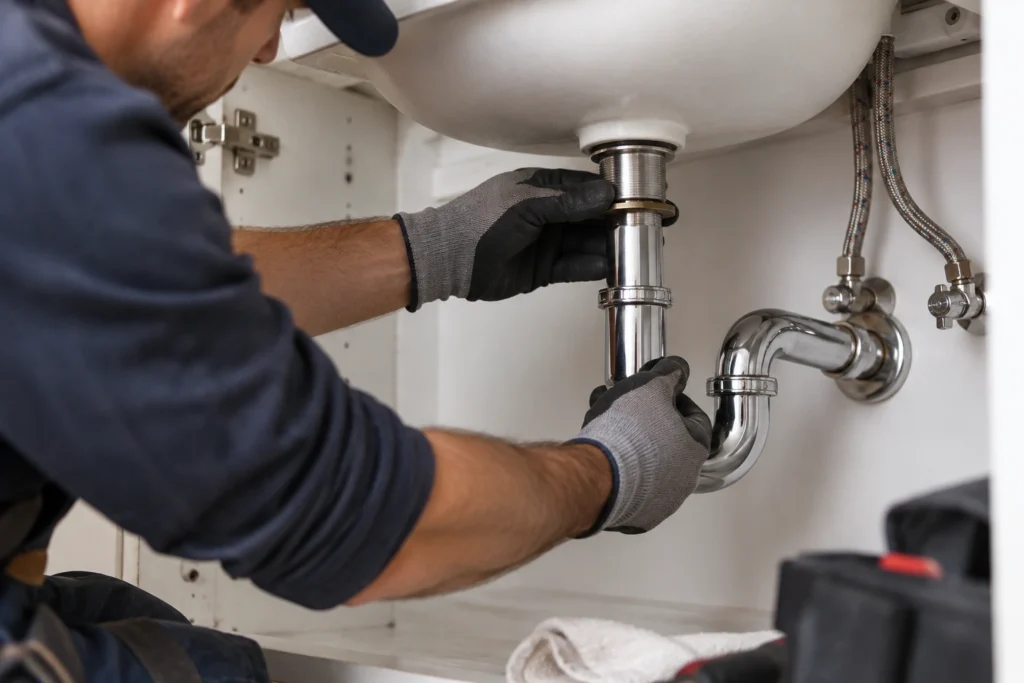
Conyers Plumbing Co provides professional plumbing services for homes and businesses, including drain cleaning, pipe repair, water heaters, fixture installation, sewer line repair, toilet repair, and emergency plumbing. Whether you need a quick repair or help with a larger plumbing problem, our team delivers dependable service focused on quality workmanship and lasting solutions.

Call Us Today
(470) 470-7151
24/7 Availability
Monday-Sunday
A faucet dripping all night wears the seat and can stain the basin, and on an older Conyers bath valve it often means the cartridge or washer is done. Shut the stop under the sink if it still turns, and put a bowl in the basin so you can see whether the drip is speeding up. Do not crank the handle down harder; that scores the seat. We bring common cartridges for the builder-grade baths on these streets and test the valve body before we talk about a shower valve replacement. If the drip is at the tub spout while the shower is off, the diverter is the part, not the handle.
We take that call any hour, because a toilet that will not go down can put water on a slab or a bath floor before morning. Who to call for a clogged toilet is the same crew that already knows whether your house is on a slab or a crawl. Do not keep flushing, and do not dump chemical opener in the bowl. We cable from the closet first, then move to the main if more than one fixture is slow. If the tub and the toilet both back up, that is a main line, not a flapper.
Yes. A plumber for a condo or townhome still starts with the shutoff you control, then we map what is shared behind the wall. We do not open a neighbor’s line without a clear path, and we tell you what we can finish inside your unit that day. Fixtures, disposals, and in-unit heaters are the usual first visits. If the wet spot is in a shared wall or a slab that serves more than one address, we document it so you can take that finding to the association with facts instead of a guess.
Most first visits run about one to two hours for a single fixture or a tank diagnosis, longer if we are opening a wall or tracing a slab wet spot. You describe the problem, you show the shutoff if you know it, and we fix what the test names that day when the part is on the truck. We walk you through the reading before tools come out. After the repair we run the fixture, check the shutoff, and wipe the work area. If a second trip is needed for a special part, we leave the house stable and dry.
A tankless water heater fits when the gas line and vent can carry the load and the household wants hot water without a tank sitting in a garage that freezes. It is not automatic on every Conyers house. Some 1990s ranches have a light-duty gas run that will not feed a high-BTU unit without a line upgrade. We measure inlet size, combustion air, and the fixture count first. If those numbers do not support tankless, we replace the tank with a correctly sized hot water heater and keep the venting honest to the existing chase.
Banging pipes in the walls are often water hammer from a fast-closing washer valve, or a loose strap on a copper or CPVC run. In mixed-era additions the new PEX can slap where it was left unclipped. We shut the house, drain pressure, and listen while someone opens and closes the washer or a bath valve. Loose straps get clips. A failed arrestor at the washer gets a new one. If the bang only happens when the hot water heater recovers, we check the dip tube and the T&P so we are not treating a tank problem as a framing problem.
Conyers Plumbing Co is the local plumber for the whole house: tanks, drips, drains, lines, disposals, and the rare night when a pipe opens. We work houses, townhomes, and condos in Conyers with the same test order every visit. If you need a best plumber for older homes on these streets, that is the galvanized and crawl work we already run. Full service plumbing here still starts with the shutoff and ends with a dry floor. When the house is ready, we are ready.
From a rumbling heater in a garage to a slow tub on a slab, the crew treats one house at a time. You will see the reading, the part, and the last check. Keep the description short when you reach us, and have the decade and the floor type if you know them. That is enough to start.
Reach out to us for assistance.
Service ZIPs: 30012, 30013, 30094
Taking care of your home includes taking care of your plumbing. Simple steps like not pouring grease down the sink and knowing where your emergency water shut off valve is can make a big difference. However, when professional help is needed, it is important to call a team that knows what they are doing.
We are dedicated to maintaining the health and safety of the plumbing systems in Conyers. We take pride in our work and in our community. Thank you for considering Conyers Plumbing Co for your residential and commercial plumbing needs. We look forward to serving you.
(470) 470-7151
From clogged drains and leaking pipes to water heaters, sewer lines, and emergency plumbing, our team provides reliable plumbing service for homes and businesses.