
351 Gees Mill Business Pky N, Conyers, GA 30013
Available 24/7
351 Gees Mill Business Pky N, Conyers, GA 30013
Available 24/7
Fixture Installation
At Conyers Plumbing Co, we specialize in high quality plumbing fixture installation and repair. We serve homeowners and businesses throughout Conyers, ensuring that every sink, toilet, tub, and tap operates perfectly and looks beautiful. Updating your plumbing fixtures is one of the most effective ways to refresh the look of your home without committing to a full scale renovation. A modern kitchen faucet or a sleek new bathroom vanity can transform a space instantly.
When a faucet drips through the night or a toilet rocks on the floor, Conyers Plumbing Co handles fixture installation in Conyers for houses, townhomes, and condos. We help homeowners who need a new lavatory set, a toilet that seals, a shower valve that mixes, or a kitchen faucet that shuts clean. The same crew already knows the builder layouts and the older shutoff spots on these streets.
We also handle a failing hot water heater, a drain that backs up, a garbage disposal that jams, a pipe that weeps, and after hours emergency plumbing when a supply lets go. Around Olde Town, many baths still run on original stops from houses built well before 1980, and 30013 homes on later streets often have builder-grade cartridges that wear first. Neighborhood baths bring dripping cartridges, angle stops that will not close, and trim that never quite matched the line behind it.
We test the stops and the supply before we cut a hole, and we leave the room dry with the trim seated and the floor wiped. We answer 24/7 so a leak at a faucet or a tank that will not fill does not wait until morning. From the first call we walk through what you see, what still shuts off, and which bath is open. The checks below are what you can do safely while we are on the way.
From the first call to the final check, Conyers Plumbing Co keeps the plumbing service process simple, clear, and focused on solving the problem correctly.
Tell us what’s going on and choose a convenient time for your plumbing repair or service.
We inspect the issue, explain the recommended solution, and complete the necessary plumbing repair or installation.
We test the plumbing system, check our work, and make sure everything is operating properly before we finish.
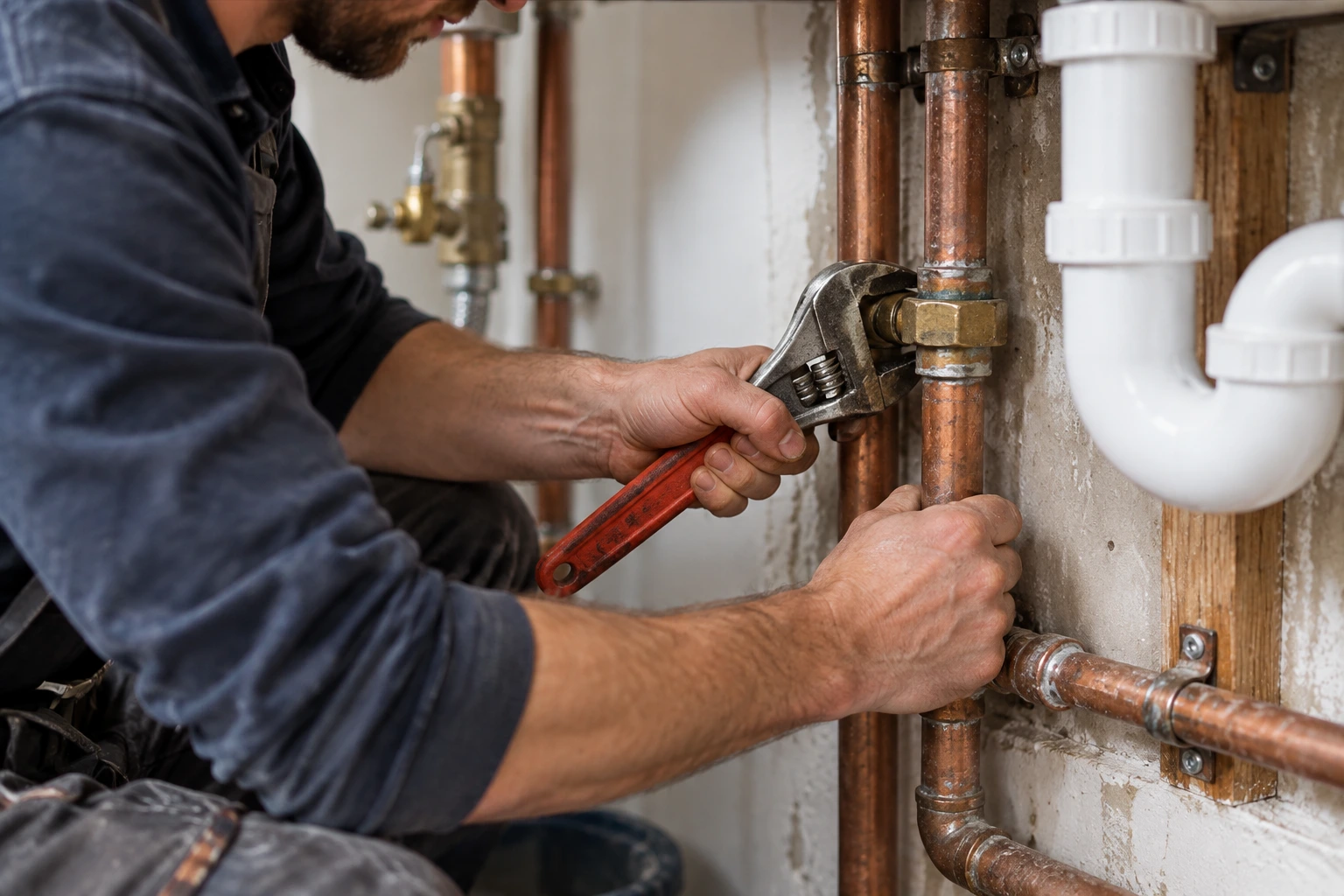
When a fixture leaks, the first job is to stop water from reaching the floor without breaking a stuck stop. We would rather find the house valve than replace a sheared angle stop. A photo of the brand and the wet spot helps us load the truck for that bath. If the toilet rocks, sitting on it or caulking the base can hide a broken flange until the floor is wet.
These steps keep water off the floor without breaking a stuck valve.
These moves make a small leak harder to see and harder to stop.
Neighborhood baths in Conyers often start with a dripping cartridge rather than a failed main. Cartridges and seats wear as water from Rockdale Water Resources moves through them during long cooling months, and light-duty stems give up first. We confirm which handle drips and whether the stop under the sink still turns.
A faucet dripping all night stains the enamel and keeps the room from going quiet. When we arrive we shut the stop, pull the handle, and read the cartridge type before we set a match. If the body is scored, faucet repair will not hold and we move to faucet installation with a deck set that fits the hole spacing. Summer load runs these valves for hours, so a drip that started in hot weather often traces to a worn cartridge.
A toilet that rocks on the floor feels unsafe and can break the wax seal in a week. On Conyers slab houses from the 1960s onward, the closet flange sits in the concrete, so rock often means a broken flange bolt or a flange set below the finish floor. In crawl houses the flange sits on wood, and that wood can soften around the closet bolts.
We pull the bowl, read the flange height, and decide on a wax ring, a repair ring, or a full toilet installation. We install a new toilet on an old flange only when the ring is sound and at the right height. A new bowl on a broken flange will rock again, so the ring comes first.
A shower that swings from cold to hot makes a morning in a Conyers house harder than it needs to be. Mixing spools wear, and some homeowners ask for a plumber to install a new shower when the valve has been sticking for months. We ask whether every fixture has hot water or only this stall, because a tank problem and a valve problem feel the same.
We shut the supplies, pull the trim, and pressure-test the valve body before we replace a shower valve behind the wall. If the body is cracked, shower repair at the cartridge will not last, and we open the tile or the access panel to set a new valve. When every fixture is cold, we stop and point you to water heater repair instead of chasing the shower.
The shutoff nobody can find is often the angle stop under a sink, painted to the wall or stuck after years open. When the shutoff valve will not turn off, a simple faucet job becomes a house-valve shutdown. In Olde Town baths those stops sit on old 3/8 inch supplies, and they crumble when forced.
We never force a frozen stop, because the stem can shear and spray the cabinet. We close the house valve, drain the line, and set a shutoff valve replacement that matches the pipe. Freeze risk in unheated garages and crawl runs is why a stop that sat for years can fail the morning you need it.
A sink installation in a Conyers bath is more than dropping a bowl in a cutout. The deck has to sit level, the drain has to match the trap, and the supplies have to reach without kinking. A bathroom sink faucet leaking under the cabinet is often the supply nut or the drain flange, not the bowl itself.
We measure the cabinet, the hole spacing, and the drain center before we unbox the sink. New fixtures on older piping get new stops and new supplies, not reused compression rings. If the drain is the failure, we pause for drain cleaning rather than blame the bowl. Horse Park edge houses from the 1990s often have PVC drains and copper supplies, which makes a vanity swap cleaner than a galvanized bath.
Kitchen faucet replacement looks simple until the deck is rusted or the stop is stuck. Many Conyers kitchens still have three-hole bodies, while newer punch-list trim on later builds hides a valve that never seated. We measure hole count and supply size before we promise a swap on the first visit.
We close the stops, pull the old body, and clean the deck so the new gasket seats. When a kitchen faucet replacement the same day is possible, you will see the new faucet live-tested before we leave. If punch-list trim hides a bad valve, we pull it and test rather than caulk the leak. For a leak in the wall, pipe repair is the right visit, not another faucet.
The choice on most fixture visits in Conyers is repair the part, replace the fixture, or fix the line that feeds it. We make that choice after the stop is closed and the body is open, not from the driveway. Time on site for a cartridge is often under an hour once parts match. Houses along Interstate 20 often sit on slabs, so a line repair there is slab work we name before we cut. A full toilet set takes longer because the flange and the floor have to be right.
A dripping faucet with a sound body and a live stop is a cartridge job, and that repair can finish on the first visit. We pull the cartridge, inspect the seat, and only then decide whether the brass can hold a new seal. In baths with copper or PEX, this is the common path for faucet repair. You will see the handle back on and the drip gone at the aerator before we pack up.
Replacement is the better path when the body is scored, the finish is failed, or the hole spacing does not match a cartridge kit. Toilet repair at the flapper is enough when the bowl is solid and the flange is sound, but a cracked tank needs a new toilet. A rocking bowl on a broken flange or a builder faucet that weeps at the hub also needs a new fixture, not another kit. We show you the failed part before we unbox the new one so the choice is visible.
Sometimes the fixture is fine and the supply or the drain is not. A new faucet on a pinholed galvanized stub will leak at the thread no matter how good the tap is. That is when we stop fixture work and move to pipe repair in the wall or under the slab. Polybutylene from 1978 to 1995, where it appears, is another reason we look behind the stop before we celebrate a new tap. You will get a clear choice to set the fixture or open the line, not both at once by accident.
We stage from 351 Gees Mill Business Pky N, so the truck is in Conyers before the work even starts. Cartridges, wax rings, 3/8 and 1/2 supplies, and common shower valves ride on the truck. You will see us walk in with parts that fit these houses rather than a blank order sheet.
A fixture that still has a live stop is a different job than one that needs the house valve. We try the angle stop by hand, then we decide. Conyers Plumbing Co will not yank a faucet while the line is still charged. You will hear us call the stop status before the first handle comes off.
Older Conyers houses often have 3/8 inch compression stops while newer builds use 1/2 inch supplies, and we carry both. A mismatch here is how a new fixture leaks at the supply line on the first night. You will see the old nut come off and a new supply that fits before the water returns.
Rags go down before the first wrench, and they come up wet, not the floor. Trim is seated, escutcheons are tight, and the house valve is restored if we used it. We run hot and cold, flush the toilet, and wipe the cabinet. 24/7 availability means this same close-out happens at night when a supply lets go.
Tell us which bath or kitchen, what you see, and whether any stop still turns. A photo of the faucet base or the toilet closet bolt helps us load the truck. We repeat that back so the visit starts with the same picture. Most of this takes a few minutes on the phone.
We give you a window and we name the work as fixture installation so you know what to expect. If the house valve must be closed, we say how long the water will be down, often under two hours for a faucet and longer for a shower valve. You will know whether we plan to stay in one room or need attic or crawl access. Same-day diagnosis on the first visit covers the stop and the body before we unbox a new fixture.
On site we shut water, open the fixture, and show you the worn cartridge, the scored body, or the broken flange. That is the decision point for repair or replace. The part sits in hand, not in a story about it. We do not open a wall until that choice is clear.
We install, torque, and restore water, then we check other taps so a closed house valve did not hide a second drip. The toilet gets a dye check and the sink cabinet gets a dry paper test. You will get a walk-through of what changed and what to watch for the first day.
Occasional hard freezes put burst risk on hose bibbs, garage lines, and exterior-wall supplies that feed secondary baths in Conyers. Hot, humid summers then cycle indoor cooling and watering, which works cartridges and toilet fill valves all day. Cecil sandy loam under slab houses is well drained with moderate subsoil permeability, so lines move less from heave than from age, but a rocking toilet still loads the flange bolts. Fixture work here is about stops, cartridges, and flanges that see those seasons every year.
When water is already spreading across the floor at night, emergency plumbing is the first visit, and the fixture set waits until the line is stable.
When every tap is cold, water heater repair is the better path than a new shower handle.
When the bowl is fine but the drain gurgles, drain cleaning is the work that belongs instead of another toilet.
The handle is only the lever on top of the stem. Water stops inside the cartridge, which is the valve in the faucet body. Many Conyers baths still have discontinued cartridges, so a shelf kit will spin and still drip. We close the stop, pull the cartridge, and match the body by brand. If the brass is scored, we replace the whole faucet.
The angle stop, which is the small valve on the supply, can freeze after years open. Forcing it often shears the stem and turns a drip into a spray. Older houses use these stops on 3/8 inch supplies, and mineral film locks them. We set a shutoff valve replacement before we pull the faucet, using the house valve if the stop will not turn.
A kitchen faucet replacement the same day is common when the stops hold and the deck holes match. We measure hole count, sink material, and supply size on the first visit. Many Conyers kitchens from the 1990s use three-hole decks, while newer houses along Georgia Highway 138 often have a single hole. If a stop crumbles, we protect the cabinet and return with the right body.
They can, but the adapter and the stop have to match the old thread. Galvanized steel was typical before the mid-1970s, and a new set will leak on crusted pipe. In Milstead bungalows we cut back to clean pipe, set a new stop, and then install the faucet. If the galvanized is thin, the honest path is a short repipe rather than stacking adapters.
When a toilet keeps running, what to do first is lift the lid and see whether the flapper sits. Close the stop behind the bowl if it turns by hand, and do not force a painted stop. We test the flapper, the chain, and the fill height, then set a new fill valve or a full toilet installation. That keeps the floor dry and the water bill from climbing.
Yes, we install a new toilet on an old flange when the ring is intact and at the right height. On Conyers slabs a low flange needs a repair ring, not a double wax stack. On crawl houses we repair soft wood around the closet bolts before the bowl goes down. You will see us bolt the bowl, set the tank, and dye-test the flapper.
The first check is whether the closet bolts are tight and whether the bowl lifts on one corner. Next we look at the flange, which is the ring that holds the toilet to the drain on a slab. We also feel the floor for a wet ring at the base. Only after that do we talk about a new bowl or a repair ring.
Builder fixtures in newer Conyers subdivisions can hide a valve that never seated. A punch-list faucet may look new while the cartridge was cross-threaded or the shower valve was not supported. We pull the trim, pressure-test the valve, and replace a shower valve behind the wall when the spool is damaged. You will see us cap, test, and then close the wall with the right escutcheon.
Fixture installation in Conyers covers the drip, the rocking bowl, the shower that will not mix, and the stop that will not close. We set faucets, toilets, sinks, and valves for houses, townhomes, and condos, and we stay with the line behind the trim when that is what failed. For a wider list of house work, see our plumbing services, and for the company overview start with the Conyers plumber crew. If a tankless water heater is the upgrade you want instead of another tank, that visit is separate from trim. We keep the visit ordered from the first description of the room to the last wipe of the floor.
Reach out to us for assistance.
Service ZIPs: 30012, 30013, 30094
From clogged drains and leaking pipes to water heaters, sewer lines, and emergency plumbing, our team provides reliable plumbing service for homes and businesses.