
351 Gees Mill Business Pky N, Conyers, GA 30013
Available 24/7
351 Gees Mill Business Pky N, Conyers, GA 30013
Available 24/7
Monday - Sunday
We repair the drip, the hot water heater, the shutoff nobody can find, and the lines under slab houses for homeowners in Conyers. Conyers Plumbing Co is the residential plumber for houses, townhomes, and condos, and the trucks leave from 351 Gees Mill Business Pky N in 30013. The crew treats the whole house, not one fixture in isolation, because a drip at a sink can share a cause with a weak tank or a hidden valve.
On a typical visit we handle fixture installation, drain cleaning, garbage disposal repair, pipe repair, hot water heaters, tankless water heaters, and emergency plumber work after hours. Drains are one section of the house, not the only reason we come. Many of the bungalows in Olde Town still have the older shutoff spots our people look for first, and those same hands know the builder layouts on later streets.
We test before we replace a part so the first visit produces a same-day diagnosis you can hear in plain speech. Floors get wiped, valves get labeled, and the work stops at the job we came to finish. The shop is open 24/7, so a freeze opening in a garage does not wait for weekday daylight. The sections below walk through how a plumbing visit works from the details you share to the last running check.
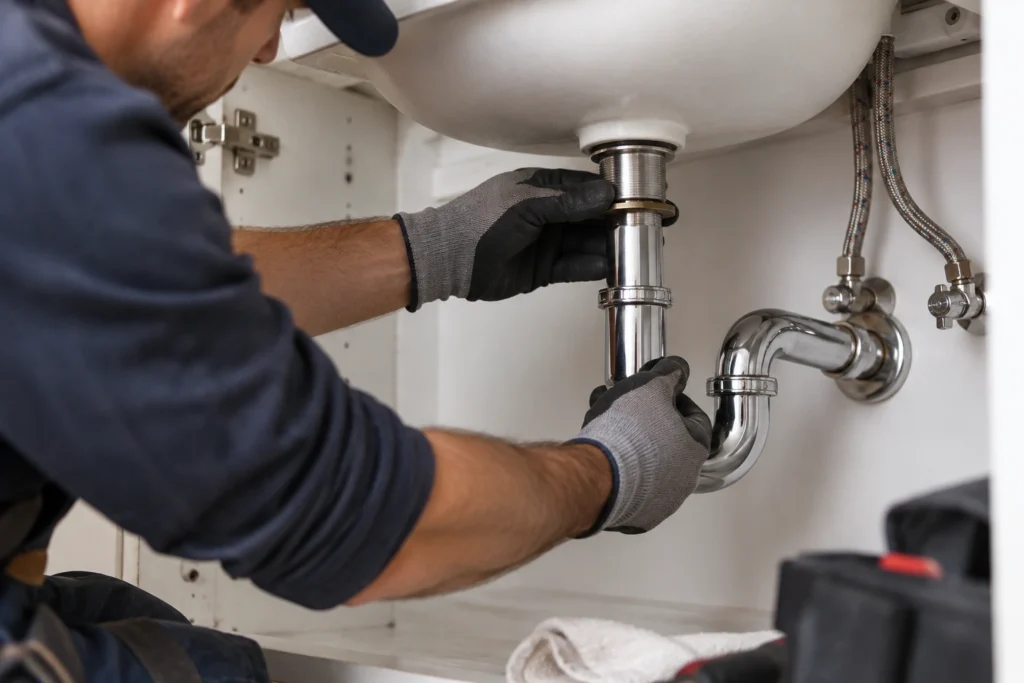
Conyers Plumbing Co provides professional plumbing services for homes and businesses, including drain cleaning, pipe repair, water heaters, fixture installation, sewer line repair, toilet repair, and emergency plumbing. Whether you need a quick repair or help with a larger plumbing problem, our team delivers dependable service focused on quality workmanship and lasting solutions.

Call Us Today
(470) 470-7151
24/7 Availability
Monday-Sunday
Conyers Plumbing Co runs a visit in four beats, and we keep them in that order so nobody is guessing in the hallway. We arrive, we locate the shutoff, we explain in plain speech, and we finish the job we came for. Times vary with access, but the first call is usually a few minutes and the first tests at the house often fit in a short window before any repair talk. That is how a plumbing visit works when the goal is a dry floor and a valve you can find later in Conyers.
The first call is a short intake so the truck rolls with the right fittings. We need the rooms that are wet, whether other fixtures still run, and whether anyone already closed a valve. Noises, a tank that ran out of hot water, or a drain that only backs up at night all change what we pull from the shelves. A local plumbing company in Conyers can often picture the bath group from those details because we have worked these builder layouts before. Five minutes of clear description usually saves a second trip for a part.
Once we are inside, water control comes before any wrench. We verify the shutoff, then we read pressure and temperature and we look at the fittings that are already open. A plumber that tests before replacing parts will not pull a cartridge just because the handle drips. If the complaint is heat, the water heater repair checks start at the T&P valve, which relieves pressure on the tank, and at the heating parts after the tank is safe. Those tests usually take a short window, and they tell us whether the visit stays at one fixture or moves to a line.
Before a repair starts, you will hear what failed, what we ruled out, and what the house will look like when we stop. A local plumber who explains the problem will use the fixture names you already use, not shop jargon. If two options exist, we say how long each path usually takes and what you will see in the room. That pause is part of the work. People in Conyers deserve a clear choice while the water is still off and the floor is still dry.
The last step is a running check at the fixture and a look at every joint we touched. Labels go on the shutoff we used so the next person in the house can find it. Drop cloths come up, scrap goes out, and the water stays on only after the joint holds. If the original call was an emergency plumbing leak, we still do that last running check even when the hour is late. The visit ends when you can use the room and you know which valve to turn.
Conyers Plumbing Co keeps the same people on the drip, the tank, and the hidden shutoff so a later visit does not start from zero. That matters on streets where one house is a crawl bungalow and the next is a slab. The points below are practical, each tied to something you can see on the truck or in the house after we leave. Homeowners stay because the sequence repeats. The crew is the same one that already knows the older shutoff spots.
New houses on later streets and older bungalows do not share one valve map, and guessing costs time. Our people already know the bath groups that keep repeating on these lots. The trucks leave from 351 Gees Mill Business Pky N with stops, tank parts, and common trim so the first visit can finish. That stock list comes from the houses, not from a generic van kit. You see it when the right valve is on the shelf instead of on order.
A drip is not the first problem if nobody can turn the water off. In crawl and pier-and-beam bungalows the original stop is often in the dark near the bath group. We light that run and label it before a supply line comes apart. Homeowners notice that pause because it is the difference between a controlled repair and a scramble. The older shutoff spots on these streets are part of why the same crew keeps getting the call.
A wet ceiling can be a fixture, a pipe repair, or a slab line, and those three jobs do not use the same parts. We test pressure and look at the fittings that are already visible so a good valve is not thrown away. You get a same-day diagnosis in the room, then a repair that matches the reading. That order keeps a small drip from turning into a pile of extra trim on the counter.
Drop cloths, a labeled valve, and a dry floor are part of the job, not a courtesy. We run the fixture after the last wrench turn and we wipe the area that was wet. If a new lavatory trim was the work, the fixture installation still gets that same close. People remember the label on the shutoff the next time a supply has to close in a hurry. The house should look like a repair happened, not like a project is still open.
The board is staffed 24/7, including nights and weekends, so a leak does not sit until Monday. An after hours call still starts with the shutoff and the same tests. For the wider list of residential work, see our plumbing services. You will get the same sequence late at night that you get in the afternoon, just with more towels on the floor. The hour on the clock does not change the order of the visit.
Housing in Conyers splits along a clear line. About 37 percent of units were built before 1980, so galvanized corrosion and low pressure still show up on those lots. About 36 percent rose from 1980 to 1999 and about 28 percent since 2000, which is why copper, PVC, PEX, and some polybutylene from 1978 to 1995 can sit a block apart. Winter freeze risk in garages, summer tank cycling, and Cecil sandy loam around slab edges are the loads we plan for, and Rockdale Water Resources draws surface water from Big Haynes Creek at Jack Turner Dam with hardness unpublished.
Hot, humid summers push indoor cooling and lawn watering at the same time, so tanks, fixtures, and mains cycle hard. A hot water heater that was only mildly noisy in spring can struggle after weeks of short, repeated draws. Kitchen and bath drain backups also rise when the house is full and the dishwasher runs more. If the sink is the complaint, drain cleaning is the right visit rather than a tank swap. We still check supply so a weak galvanized run is not missed.
Occasional hard freezes and ice move across north and metro Georgia, and burst risk sits in unheated garages, crawl runs, and lines on exterior walls. We treat those openings as isolation jobs first: find the shutoff, stop the water, then open the damaged section. A hose bib left on or a garage that never gets heat is a more common cause than a main in the street. The repair is the same whether the freeze is brief or long.
Conyers Plumbing Co works houses across the city, and the notes below are the housing we see on these streets. Each pocket has an era and a pipe material that came with it. Failures follow those materials more than they follow a map. Walking those streets is how a plumbing company that has worked on older homes still handles a 1990s manifold without treating it like a mystery.
Olde Town grew from the 1840s through the 1940s around Main Street and the 1939 Rockdale County Courthouse. Galvanized steel and cast iron are typical in those bungalows, so low pressure and thread leaks show up before a new fixture ever does. We look for the original bath group valve first because later owners often never labeled it.
Milstead mill village sits by the Yellow River about two miles north of Olde Town, with mill bungalows that ran through 1960. Those houses share galvanized and cast iron lines, and crawl or pier-and-beam space is common under the floor. A visit there still starts by finding the shutoff before anyone opens a trap.
Railroad Street lots in the Conyers Residential Historic District often measure about 75 by 120 feet and date to the early 1900s. Galvanized lines in those small lots leave little room to hide a leak, so staining at a bath stack shows early. Our people already know which walls usually hold the original runs.
West Avenue and the Interstate 20 access streets filled in from the 1960s onward after the interstate arrived. Copper and PVC are typical on those slabs, and the failure we see is wear in the buried line rather than a rusted stack. A wet carpet near an interior bath is usually the first clue.
Along Georgia Highway 138 toward the Georgia International Horse Park and Centennial Olympic Parkway, most housing dates from the 1990s onward. PVC and PEX are typical, and fixture drips or a tired hot water heater are more common than a rusted main. Those builder layouts are the ones our trucks stock fittings for.
Opening a disposal to clear a hum can put a hand on a live unit, and reset buttons still carry current. A garbage disposal repair visit starts by killing power at the breaker, then testing the unit, so the mistake is not a shock. That step is the difference between a jammed plate and a ruined motor. Home kits skip it because they start at the splash guard, and we will not.
A small drip behind a tub wall can wet subfloor while someone keeps tightening a handle. Misdiagnosis is how a cartridge gets replaced three times while the supply is the real leak. Water damage in a Conyers slab house travels sideways, so waiting on a weekend experiment can lift flooring that was still sound on Friday. Professional repair starts with a test that names the failed part before anyone buys trim. That is slower in the first ten minutes and faster over the week.
Modern single handle faucets and tankless exchangers have fragile cartridges and sensors that fail when the wrong tool twists them. The T&P valve is not a home test point because a failed reinstall can dump scalding water into a closet. Controls on newer trims also hide small set screws that strip easily. Calling for help on those parts is not about skill pride. It is about not turning a small trim job into a ceiling stain in Conyers.
Some steps look small until they are skipped. We keep three of them on every visit in Conyers even when the hour is late and the job looks simple. They protect the house after we leave. They also keep a small fixture repair from turning into a second leak in the same week.
If we cannot close the water, we do not start the repair. The search includes the meter area, the garage, the crawl, and the closet stops. Labeling the valve we used is part of this step so the next person is not hunting in the dark. That is true on a simple drip and on a tank swap. The minute spent here is the minute that keeps the hallway dry.
A joint that looks dry for one minute can weep after pressure returns. We restore water, watch the work, and only then pack the tools. For a tankless water heater conversion or a tank replacement, that running check includes hot water at the farthest bath. Skipping it is how a second visit gets born. We would rather spend the extra minutes now.
When the tank is in play, we look at the T&P valve and the discharge pipe so pressure has a safe path. If the tank is not the job, we still note obvious discharge issues and say so. This check takes a minute and prevents a scalding dump into a closet. It is a small look with a large consequence. Homeowners see us pause at the tank even when the original complaint was a sink.
The first thing you should expect when the plumber arrives is a walk through the rooms you named, not a rush to cut pipe. We confirm that water is off if you already closed a valve, then we look for staining and the nearest stop. A local plumber who explains the problem will say what each reading is for before any part comes off. You will hear the plan in plain speech before tools come off the truck in Conyers.
A stuck house shutoff is treated as a control problem before it is treated as a parts problem. We check the meter area and the closest interior stop we can turn without snapping an old handle. Crawl space baths often hide that valve near the original group, and slab houses often hide it in a garage or closet. Once water is isolated, we talk about loosening the stem or replacing the valve body so you still have a working shutoff in Conyers.
Replacing a faucet will not help if the real trouble is a galvanized run with barely any pressure left. A plumber that tests before replacing parts will read pressure and look at the aerator so the wrong cartridge does not go in. Kitchen backups need a drain check so we do not chase a drip while the stack is blocked. That order protects finishes in Conyers houses where copper, PVC, and older steel can sit on the same street.
Crawl space bungalows and slab houses both come through as ordinary residential calls. In a crawl we look for the hanging valve, damp joists, and freeze openings on poorly heated runs. On a slab we watch for a wet edge at a bath and pressure that drops when one fixture opens. Plumbers in Conyers see both types because the city grew in those two waves. The test order stays the same so you are not asked to guess the foundation from the kitchen.
The most useful details are which rooms are wet, whether water still runs at other fixtures, and what you already tried at the valves. If the house is in Conyers we can often match that description to streets we already know. Clear access to the hot water heater closet and the main stop saves time once we arrive. That is enough for a same day plumber visit to start testing instead of searching for the leak. A calm description beats a long list of parts you think you need.
Conyers Plumbing Co stays with the whole house: the drip, the hot water heater, the hidden shutoff, and the slab line, plus drains, disposals, and fixtures when those are the real job. Families looking for a Conyers plumber can also read our plumbing FAQ if they want more detail before they reach out. We still start every job by controlling water, testing, and explaining in plain speech, then we finish the room we came to fix. Houses in Conyers from the historic lots to the Horse Park edge get that same sequence, day or night. The shop on Gees Mill Business Pky N is the same crew that already knows those streets.
Reach out to us for assistance.
Service ZIPs: 30012, 30013, 30094
From clogged drains and leaking pipes to water heaters, sewer lines, and emergency plumbing, our team provides reliable plumbing service for homes and businesses.