
351 Gees Mill Business Pky N, Conyers, GA 30013
Available 24/7
351 Gees Mill Business Pky N, Conyers, GA 30013
Available 24/7
Pipe Repair
The plumbing system in your home is a complex network of pipes, valves, and lines that work together to deliver clean water and remove waste. Most of the time, these pipes are out of sight and out of mind, hidden behind walls, under floors, or buried underground. However, when a pipe fails, it quickly becomes the center of attention. At Conyers Plumbing Co, we specialize in comprehensive pipe repair, pipe installation, and main water line services. We are dedicated to maintaining the integrity of the plumbing infrastructure for residents and businesses throughout Conyers.
When a supply line fails, Conyers Plumbing Co handles pipe repair in Conyers for homeowners in houses, townhomes, and condos. We come for the drip, the warm slab spot, the shutoff nobody can find, and copper that keeps pinhole leaking. The same crew knows builder layouts on these streets and older valve spots in Olde Town bungalows. We also handle emergency plumbing, hot water heater repair, drain cleaning, fixture installation, garbage disposal repair, and tankless water heater work beside a failed line.
A wet ceiling or a floor that feels warm is often a supply leak, not a drain. Rockdale Water Resources sends surface water from Big Haynes Creek, and the older galvanized and copper in 30013 still carry that city water through crawl spaces and slabs. We test before we cut, we put the room back in working order, and we take these calls 24/7. The sections below walk through first checks and how we decide between a section repair and a repipe.
West Avenue houses from the 1960s onward often hide a leak under the floor, while Milstead mill bungalows more often show it in a crawl or a wall. A coupling that holds for years is a different visit from a week of PEX in attics and walls. We explain that choice in the house so you can see the wet run and the dry rooms before anyone cuts.
From the first call to the final check, Conyers Plumbing Co keeps the plumbing service process simple, clear, and focused on solving the problem correctly.
Tell us what’s going on and choose a convenient time for your plumbing repair or service.
We inspect the issue, explain the recommended solution, and complete the necessary plumbing repair or installation.
We test the plumbing system, check our work, and make sure everything is operating properly before we finish.
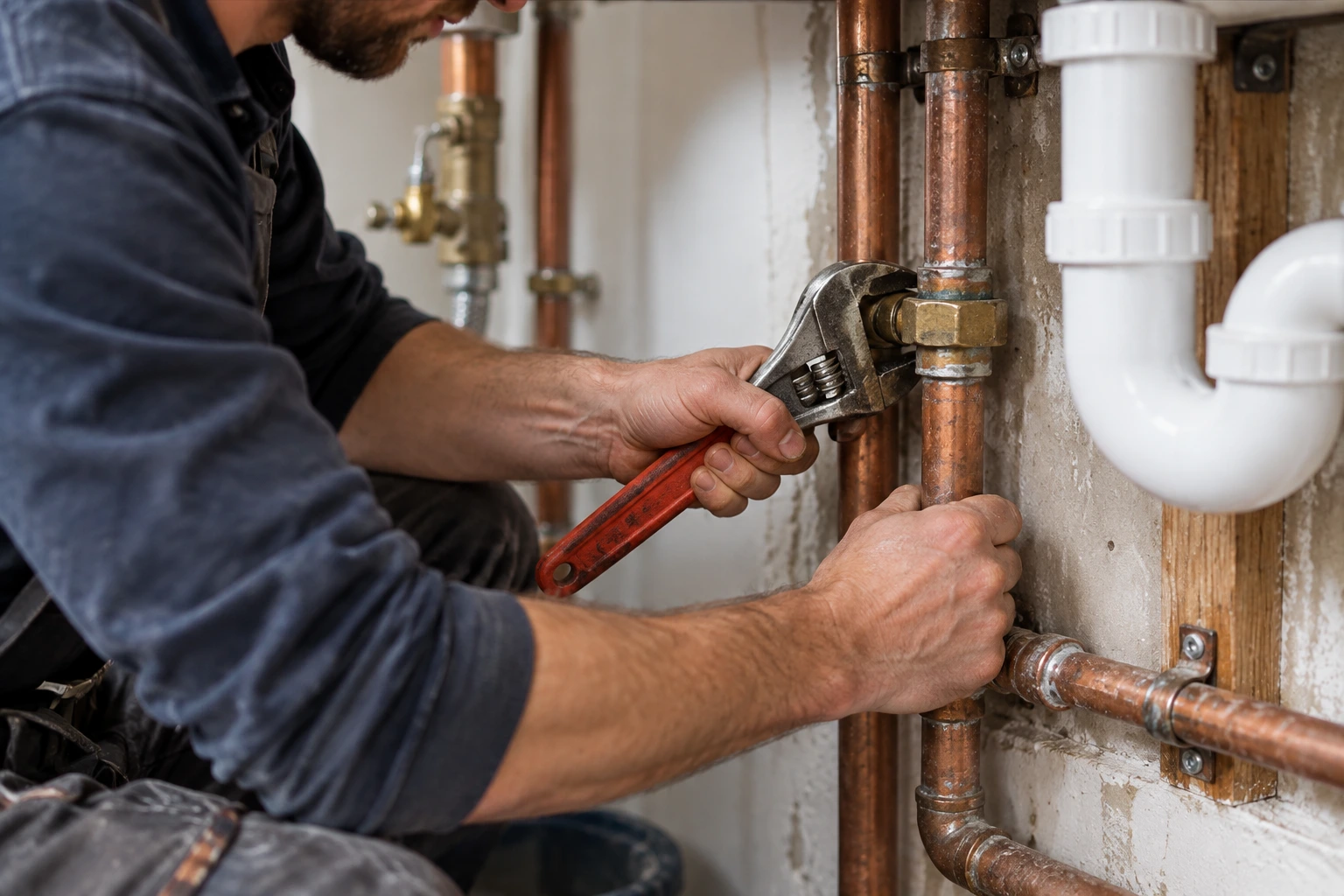
The first minutes after a pipe fails are about stopping water, not finding a hidden valve. Protect the floors and shut the house down rather than hunt in a dark crawl. When you reach us we will ask which rooms are wet, whether the water is hot or cold, and whether a valve already moved. That picture tells us whether to treat the visit as a burst, a slow wall leak, or a slab leak under the floor.
The valve that stops the house is not always the one at the street. In crawl bungalows around Milstead it is often in the crawl or a closet. On slab houses in Conyers it is often in the meter box. If water is spraying, shut whichever one you can reach first. Tell us which valve moved so the first ten minutes are spent on the wet room, not on a scavenger hunt.
Supply leaks in Conyers show up as a burst, a stain, a frozen split, a buried main, a pinhole, or a warm slab. About 37 percent of houses here went up before 1980, so galvanized and copper still sit in crawls and walls. Newer streets use copper, PVC, and PEX. The signs below are what you see in the house, and the work is deciding how much pipe to replace.
A burst turns a small fitting failure into standing water in a hurry, especially on a slab where the water has nowhere to go but the room. In Conyers this often follows a freeze in a garage or a split on aging copper. We shut the house down, cut out the failed length, and put in a new section that can take pressure. Burst pipe repair is not a clamp left behind for later.
We isolate the burst, replace the open section with copper or PEX, and pressure test before the house comes back on. If several splits opened in a cold garage, we talk about moving those lines. For a line that is still spraying when you reach us, emergency plumbing starts with the shutoff, then the same repair.
Stains that move overnight usually mean a supply line is wetting a joist and traveling far from the failed fitting. Homeowners in Railroad Street houses and other early lots often notice plaster that stays soft. We use a moisture meter and a small access hole rather than opening a whole wall. If the stain is from a drain, we stop and treat it as drain work instead.
To fix a leaking pipe in the wall we open the wet bay, replace the failed coupling or length, and test. A plumber for a leaking ceiling will also check the upstairs bath stops and the pan under the hot water heater so a tank leak is not missed. Then we dry the cavity so the room can close up clean.
Cold air in a garage or crawl does the damage before anyone sees a drip. Pipes in Conyers split at a fitting or along a thin wall, then they leak when they thaw. Frozen pipe repair in winter is thaw, cut, replace, and change the routing so the same corner does not open again. We never use an open flame in a crawl.
We thaw with controlled heat, cut out the split, and pressure test the new section. Insulation or a new route through a warm wall is part of the same visit when the garage will freeze again. Burst pipe repair on that split is a short job if only one line opened.
The buried run from the meter can lose water for weeks with no indoor puddle. The water bill went up with no leak visible, the meter still turns, and the yard may feel soft near the path of the main. Main water line leak repair in Conyers starts at the meter and follows that run. We isolate the house from the street so we know which side is losing water.
If the pipe is copper or plastic and the rest is sound, we replace the failed length. If the run is tired galvanized or polybutylene, water line replacement of the whole buried section is cleaner than stacking clamps. We restore the trench and test at the meter before we leave.
Copper does not fail with a dramatic split every time. Pinhole leaks in copper pipes often start as a green spot or a tiny spray on a 1980s or 1990s run. West Avenue and other streets from that era still have a lot of that copper in Conyers. One hole can be copper pipe repair with a coupling. A third hole on the same hallway is the start of a PEX conversation.
We measure pressure, inspect the run, and decide between a short copper pipe repair and a PEX jumper. If the hot water heater is set very hot, we mention that because heat speeds pinholes. A pressure reducing valve that has failed belongs in the same visit so the new pipe does not pit.
A warm stripe on a quiet floor is often a supply line in the concrete. Slab leak repair in Conyers is common on post 1960s houses along Interstate 20, which sit on slab-on-grade more often than the older bungalows. You may feel heat in the floor, see a wet baseboard, or watch the bill climb. Finding the leak comes before any saw, and rerouting is usually kinder than a long trench.
We listen with an acoustic scope and scan the floor before any saw cut. That order keeps us from opening a dry room while the leak sits in the slab. Then we isolate the failed branch, abandon the slab run, and feed PEX to the fixtures through the wall. If the leak is the sewer, we stop and treat it as drain work instead of slab leak repair.
The choice on most Conyers visits is whether one failed length can be replaced, or the rest of the house is about to fail the same way. Conyers Plumbing Co starts with the material we can see and the rooms that already leaked. A single pinhole on a copper run can take a coupling if the rest still holds pressure. A third failure in another bath is a different conversation, and we say so before we open more wall than the leak needs.
A section repair is the right job when the rest of the pipe still holds pressure and the failure is local. A single pinhole on a copper hallway run, a split at one freeze point, or a chewed length under a kitchen can take a coupling and a short jumper. We pressure test the remaining copper or PEX after the new piece is in. If the gauge holds and nearby walls are dry, we stop there. That visit is usually measured in hours, not days, and you keep the rest of the house intact.
On galvanized, a section is a shorter conversation. Galvanized pipes rusting from the inside fail at threads, then at the next elbow. If we open one joint in an Olde Town bungalow and the water runs rusty, we will still stop the leak, but we will also say the next joint is waiting. Polybutylene from about 1978 to 1995 is the same pattern where it still sits in a house. A tidy clamp does not change the other fittings.
Repiping an older home is the call when leaks have shown up in more than one room, when pressure is low everywhere, or when copper is pinholing along a whole bath group. PEX repiping lets us abandon bad steel in a crawl and hang new lines in the joist bays. On slab houses we route PEX through walls and sometimes the attic, then tie in new stops at each fixture. Attic runs get insulation so winter air does not freeze a brand new line. We do not saw the full living room to chase every buried copper.
Houses toward Georgia Highway 138 and the Georgia International Horse Park already have a lot of PVC and PEX from the 1990s onward, so a full repipe is less common there than a targeted water line repair. High street pressure belongs in this choice too. If a pressure reducing valve is missing or tired, new pipe will pit and fixtures will drip, which is when fixture installation of new stops and a new valve protects the repair. A repipe week keeps people living in the house, with one bath left on while chase walls open and PEX goes in.
Day one is valves, mapping, and showing you which walls open. If those walls are already open, tankless water heaters can share the week when the old tank is failing too. At the end we pressure test, open every tap, and label the new shutoffs so the next drip is not a hunt. If the real problem is a sewer line under the slab, we point you to drain cleaning instead of opening the floor for a supply leak that is not there.
The shop sits at 351 Gees Mill Business Pky N, and the Conyers Plumbing Co crew works these houses every day. Older bungalows often hide the valve in a crawl. Slab houses usually have it at the meter box. We ask which one moved before a cart comes through the living room. That saves time when a line is still wet.
A moisture meter, a listening scope, and a pressure gauge tell us which bay is wet. That order keeps us from opening a dry wall while the leak sits in the slab. You will see the wet room and the dry rooms together. We cut only after those checks agree. The house stays as closed as the leak allows.
The truck carries copper couplings, PEX, galvanized nipples, and pressure reducing valves. A common stop or a tee that belongs on a 1980s copper run in Conyers should not wait on a second trip. We match the material already in the wall when a section will hold. When it will not, PEX is on the same truck. Either way the failed length comes out on that visit.
When a line opens at night, the visit is still the same sequence: shutoff, diagnosis, a clear plan, then the repair. 24/7 here means a crew can start that sequence any hour. You will still see the failed length before a long chase opens. The last check is still a quiet meter and dry floors. A burst does not wait for weekday daylight.
Floors get wiped, openings get sealed or scheduled for close, and new valves get labeled. The goal is a dry room and a shutoff you can find the next time. Debris from a wall opening leaves with us. If PEX is hanging in a crawl, we cap the old steel so it cannot leak later. The house should feel finished, not paused.
When you contact us, we ask which rooms are wet, whether the water is hot or cold, and whether the house valve already moved. A photo of the stain helps us bring the right couplings. That is enough to know whether we are walking into a burst, a ceiling stain, or a warm floor. You get a clear window for the visit. The house can stay off water until we arrive if the leak is still moving.
We set a window and tell you what will be shut off. For a spraying line we treat it as an emergency visit. For a slow stain we still come while the drywall is wet enough to read with a meter. You will know whether we expect a short section or a longer look at the rest of the pipe. Parking and access for the crawl or the meter box get sorted before we knock.
On site we isolate, test, and show you the failed length. After same-day diagnosis we explain section repair versus a larger repipe in the room where the leak is. You see the wet run and the dry rooms before anyone opens a long chase. Pressure readings and meter movement are part of that talk. The plan is settled before the saw comes out.
We replace the failed section or begin the PEX route we agreed on. Then we pressurize, open fixtures, look at the old wet spot, and confirm the meter sits still. New valves get labeled so the next shutoff is obvious. The house should be back on water before we leave. If a wall still needs to close, that step is scheduled with the room already dry.
Winter freezes hit unheated garages, crawl runs, and exterior wall lines, and those are the openings we see after a hard freeze. Hot, humid summers and lawn watering cycle the mains and the hot water heater so tanks, valves, and buried lines work harder. Cecil sandy loam around Conyers drains well, but slab lines still wear where the house and the yard meet. That mix is why a Conyers supply leak is often a freeze split, a summer pinhole, or a tired slab run rather than a mystery in the city water itself.
Most wall leaks need one opening, not a gutted room. We shut the water off, confirm the stain is from a supply line, and open the wet bay only. On crawl houses we can often reach the same run from below and leave the plaster alone. On a slab the line may live in the floor, so we check that first. After copper pipe repair or a PEX jumper, we pressure test and close the opening so the room can dry.
If the stain grows, if you hear water in the ceiling, or if a hot water heater sits above that room, it is time. A supply leak in an upstairs bath will travel along a joist and drip far from the failed fitting. We map upstairs fixtures, check the stops, and look at the ceiling from below with a moisture meter. Drain backups can stain a ceiling too, but the repair is different. Once we know it is a leaking pipe, we open a small access, replace the failed section, and test before the drywall goes back.
A freeze usually opens in an unheated garage, a crawl run, or a line in an exterior wall. We thaw with controlled heat, never an open flame, then we look for the split. Frozen pipe repair in winter is both the opening and the reason it froze, so we add insulation or move the run if the same corner will freeze again. Burst pipe repair on a split is a new section and a pressure test. If several rooms opened at once, we talk about which lines should not live in a cold garage anymore.
We start at the meter. With every fixture off, a spinning meter means water is still leaving the system. Next we listen along the slab and the crawl, because a slab leak under the floor or a main in the yard often never shows a puddle in the living room. We also check toilet fill valves, then isolate the house from the street to see which side of the meter is losing water. Only after that do we talk about cutting a wall or opening a slab.
Pinholes are a material and pressure problem, not bad luck in one elbow. High pressure, warm water, and older copper work together until the wall of the pipe thins. If we patch one hole and leave the pressure high, the next hole opens a few feet away. We look at the whole run, the hot water heater temperature, and whether a pressure reducing valve is in place. Sometimes a section is still the right repair. Sometimes the pattern says the house is ready for PEX.
A house needs a full repipe when failures stack up in more than one room, when galvanized is closing down, or when polybutylene fittings keep seeping. One coupling is the right call when the rest of the copper holds and the walls are dry. Repiping an older home with PEX lets us leave bad steel in a crawl and hang new lines we can reach later. We will walk the house, count the failed spots, and say which job you are looking at before we open chase walls.
We look with our ears and a thermal camera before we cut a floor. A slab leak under the floor often shows as a warm stripe, a quiet hiss, or a room that stays wet along one wall. Acoustic listening tells us where the turbulence is. On slabs from the 1960s onward we would rather reroute PEX in a wall than saw a long trench. If the leak is on the main before it enters the house, that is water line repair at the buried run, not a floor demolition.
Low water pressure in the whole house with older steel is often the pipe, not the faucet. Galvanized rusts from the inside and the opening gets smaller year after year. We check the meter, the pressure reducing valve, and one fixture at a time so we do not blame a shower cartridge for a starved main. If only one bath is weak, we look at that branch. If every tap is weak, galvanized pipe replacement or a new main is the conversation, not a new aerator.
Pipe repair in Conyers covers the supply side of the house: bursts, wall leaks, frozen lines, pinholes, slab leaks, and the run from the meter. Conyers Plumbing Co will test, show you the failed length, and say whether a section will hold or the house needs PEX. If water is spraying after hours, an emergency plumbing visit still starts at the shutoff. If the wet spot is the tank, use our water heaters page instead of a wall opening. Drain backups and sewer odors belong with drain cleaning, not a saw in a dry slab.
For the rest of the house, plumbing services covers drains, fixtures, and heaters so a supply leak does not get mixed with a sewer repair. If you are matching a symptom to a room, a plumber in Conyers can start there and still send the crew that knows these streets.
Reach out to us for assistance.
Service ZIPs: 30012, 30013, 30094
From clogged drains and leaking pipes to water heaters, sewer lines, and emergency plumbing, our team provides reliable plumbing service for homes and businesses.