
351 Gees Mill Business Pky N, Conyers, GA 30013
Available 24/7
351 Gees Mill Business Pky N, Conyers, GA 30013
Available 24/7
Plumbing Services
A functional plumbing system is the backbone of any comfortable home or efficient business. From the clean water that flows from your tap to the waste that is safely carried away, every component plays a vital role in your daily life. When this system falters, it can disrupt your routine, damage your property, and cause unnecessary stress. We are here to ensure that does not happen. We provide a full suite of plumbing services designed to keep your water running and your drains flowing.
When a faucet drip, a cold shower, and a wet spot show up in the same week, Conyers Plumbing Co is the crew that takes the tank, the valve, and the leak for homeowners in Conyers. We help people in houses, townhomes, and condos who want one plumber for the whole house instead of a different truck for every room. Residential plumbing is the whole job here, from Olde Town bungalows with original shutoffs to later slab houses on the west side of town.
Our plumbing services in Conyers, GA cover emergency plumbing, water heater repair, tankless water heaters, drain cleaning, garbage disposal repair, fixture installation, pipe repair, water line replacement, slab leak detection, gas line work at appliances, and a home plumbing inspection when a buyer wants the whole picture. That range is full service plumbing for daily life in 30013, not a set of extras. Older galvanized and cast iron still sit in pre-1980 houses, while copper, PVC, and PEX show up in later additions, so one visit often touches more than one era of pipe.
We test before we cut so a wall does not open on a guess. Rooms we enter get swept, and fixtures we touch sit the way you use them. Dispatch stays 24/7 because a night leak still needs a shutoff and a plan. The notes below walk through each kind of work, the first check we run in this housing, and how a visit is scheduled after you reach out.
From the first call to the final check, Conyers Plumbing Co keeps the plumbing service process simple, clear, and focused on solving the problem correctly.
Tell us what’s going on and choose a convenient time for your plumbing repair or service.
We inspect the issue, explain the recommended solution, and complete the necessary plumbing repair or installation.
We test the plumbing system, check our work, and make sure everything is operating properly before we finish.
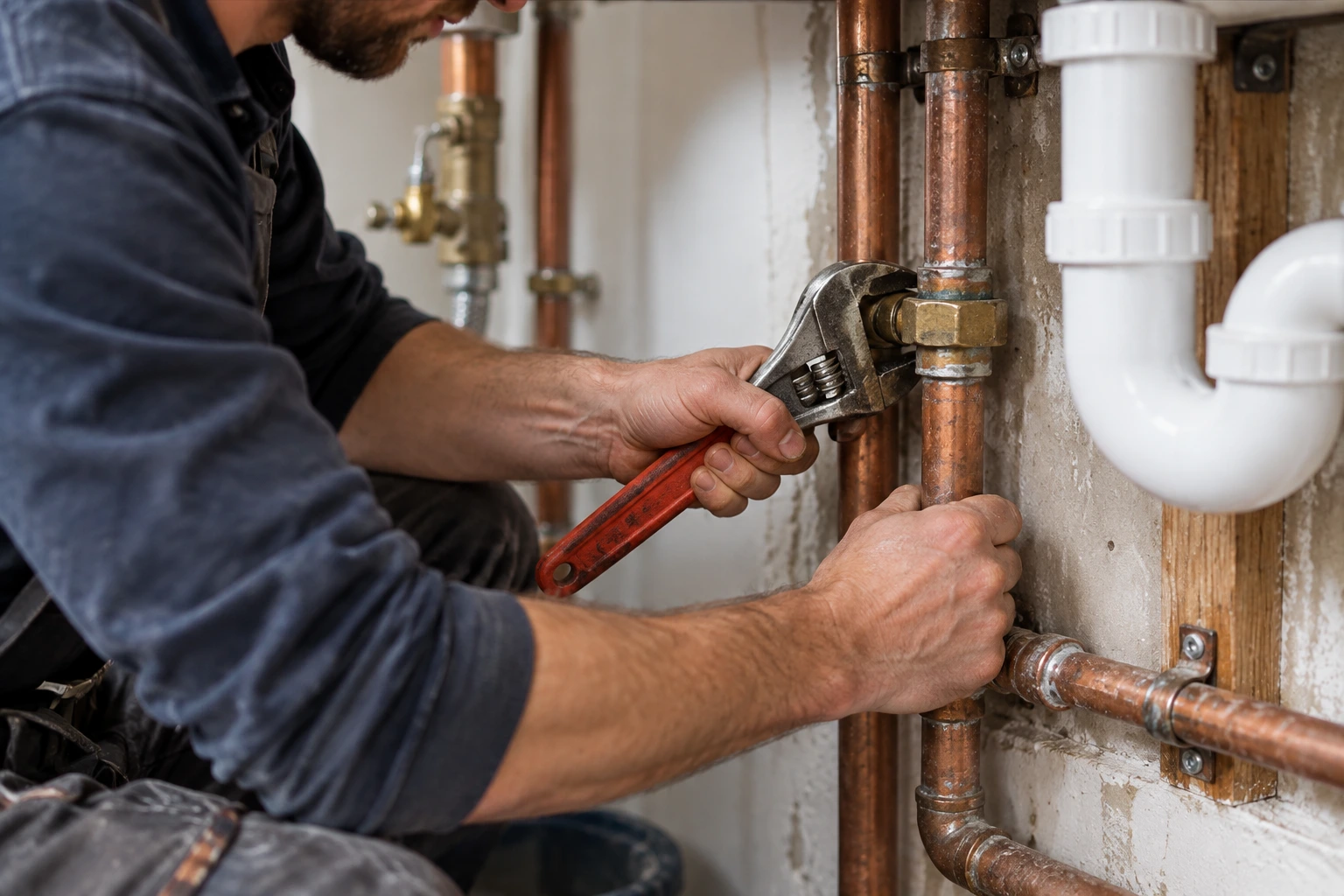
When water is going somewhere it should not, the first job is to stop the flow, then to note which rooms failed. A whole-house shop still starts at the shutoff, even when the tank and the valve are both involved. The checks below are safe for a Conyers house. Anything that needs a wrench on a frozen stem can wait for us.
The valve that kills the building is not always at the meter. In crawl and pier-and-beam bungalows around Olde Town and Milstead it is often in a closet, a hatch, or along a beam, and it may be a gate valve that has not moved in years. On slab houses the valve is more often in a garage or at the box by the street. A stem that will not move by hand should stay where it is so the valve itself does not snap.
Fixture stops under a sink or behind a toilet can be closed with fingers, and that is enough to quiet a single drip. Which rooms still have water and which drains still stand is the map we use on arrival. A photo of the tank plate, the wet spot, and the meter if you can see it helps the desk set the right truck. Emptying a full hot water heater from the drain cock as a first move usually means a scald and a wet garage, so that step waits for us.
If the smell of sewage is in the house, leave the lowest drain alone and get air moving. If a ceiling is bowing, shut water at the house valve and stay out from under the wet drywall. A frozen run in a garage can wait with the water off, because heat guns and open flame on a pipe are how a small split becomes a room of steam. We would rather find the shutoff nobody can find than have someone force the wrong nut.
Hot water, fixtures, and the kitchen sink are the rooms most people notice first. Each block below starts with the first check we run in this housing, then the signs in the room, then the fix. The same technicians handle all four, so a tank visit can still take a dripping lavatory before we leave.
A cold shower in a house full of people is not a small inconvenience, and it usually shows up on a weekday morning. Tanks in garages and crawl spaces work harder when the air around them is hot in summer or near freezing in winter, and older nipples thin out on pre-1980 stock. About 37 percent of housing units here were built before 1980, so many original tanks are simply at the end of their life. Getting heat back starts with a real test, not a tank swap on sight.
On site the first check is the T and P valve, which relieves pressure on the tank, then the thermostat, the elements or burner, and the anode. Rockdale Water Resources draws surface water from Big Haynes Creek at Jack Turner Dam, and hardness is not published, so we read scale on the anode and the dip tube instead of from a number on a bill. We repair what is still sound and we talk through a replacement only after that reading. If this is the room that failed, start with our water heater repair notes for the tank itself.
A tankless unit that throws an error or runs lukewarm is still a hot water problem, just with a different box on the wall. Houses from about 2000 onward along Georgia Highway 138 and the Georgia International Horse Park edge often already have PVC, PEX, and a tankless conversion. Scale, a blocked inlet screen, and a failed igniter are the usual faults, and they mimic a dead tank. We keep this work on the same crew that already knows your shutoffs.
The first check is the error code and the inlet screen, then flow and combustion at the unit. We do not guess at a heat exchanger when a screen or a mixing valve is the fault. A conversion from a tank is a planned stop, not a same morning surprise, because venting and sizing have to match the house. When the box on the wall is the issue, our tankless water heaters visit is the one to book.
A drip at a handle or a toilet that ghost fills wastes water and keeps a bath from ever feeling finished. Cartridge wear, seized supply stops, and cracked seats show up in houses that still have original trim. We shut the stops first, then we decide whether the body can be rebuilt or the fixture should come out. Fixture installation is the path when china is cracked or the stops crumble in our hands.
The first check is the supply stops, then the cartridge or flapper, then the seal at the china. Houses along Interstate 20 and West Avenue from the 1960s onward often have copper and PVC with original stops that fail when turned. We bring trim that matches the room when a swap is the right repair. For a drip that is really the fixture, our fixture installation work is the page that owns the swap.
A jammed disposal stops a kitchen in the middle of dinner, and a hum with no grind usually means the plate is locked or the motor is gone. Waiting often pushes food into the trap and the kitchen line. We kill power first, then we see whether the unit should be freed, repaired, or swapped. Garbage disposal repair belongs with the sink and the drain, not as a separate mystery.
The first check is power, the reset, and the hex key on the bottom of the unit. If the plate spins and the sink still stands, the blockage is in the drain, and that is a different stop. Kitchen lines in houses from the 1970s to the 1990s load up from grease on top of a weak disposal. When the unit itself is the fault, our garbage disposal repair visit is the one that fits.
Drains, buried lines, and after hours failures are the other half of the house. We still start at the shutoff, then we decide which kind of work the house actually needs. The appliance valve at the tank sits with this group because that check is safety, not a remodel.
Standing water in a tub or a kitchen sink is a daily life problem, and it usually starts at a trap, a belly, or a shared stack. Older cores still carry iron that rusts at the joints, and later houses still hold grease in PVC. We ask which fixtures fail together before we run a cable, because that map is the first check in this housing. Drain cleaning is one section of the house, not the lead story.
The first check is which fixtures share the stack, then a cable, then a camera if the blockage returns. We do not open a yard when a trap is the fault. Long showers send more water through those stacks, so a slow line in July is not always the same as a winter belly. For backups that stay in the drain, our drain cleaning work is the right call.
A wet stripe in a slab, a hiss in a crawl, or a meter that spins with every fixture off is a supply failure, not a dripping faucet. Post-1960s slab houses carry lines in the concrete, and crawl bungalows in Milstead carry them in the air where freeze openings show. We isolate the house from the meter first, then we decide between a section repair and a longer water line replacement. Pipe repair on these streets includes slab leak detection as a test order, not a guess.
The first check is meter versus house, then slab versus crawl, then the section we can save. A crushed slab line and a pinholed crawl run get different repairs, and we say which one we have before we cut. Near the 1939 Rockdale County Courthouse on Main Street, older lots still hide crawl runs that need a light and a pan, not a jackhammer. When the line itself is the fault, our pipe repair visit owns the isolation and the patch.
No water in the house, a ceiling that is still taking on water, or a leak that started after dark cannot wait for a weekday window. Emergency plumbing is the same crew, with the shutoff and the active leak moved to the front of the line. We still test before we cut, and we still leave the room swept. Night work does not change the order. It changes which failure goes first.
The first check is the house shutoff, then which rooms still have water, then whether the failure is supply or drain. A frozen garage line can wait with water off. A ceiling that is still filling cannot. We carry caps, crimps, and heater elements so same day plumbing repair is possible when the reading is clear. For a leak that will not wait, our emergency plumbing visit is the one to request.
A water heater that uses gas still has a supply, a vent, and a shutoff at the appliance, and that work stays on the same visit as the tank. Appliance gas line repair at the tank is part of the same stop when the union or the valve is the fault. We check for smell at the union before we open anything. Garage tanks see cold air and heat the same as electric tanks, so the appliance valve sticks on both.
If you smell gas or suspect a gas leak, go outside immediately and call 911 – this is a serious emergency that needs urgent attention from the gas company.
The first check after the air is clear is the appliance valve, then the burner, then the vent. We do not open a union in a closed room. If the tank is the room that failed, the water heater repair visit covers the appliance valve as well as the tank itself.
Staying with one crew matters when the heater and the shower fail in the same week. People often ask what plumbing services we offer, and the answer is the whole house on one crew. The notes below are the practical reasons, tied to the street we stage from and the way a visit actually runs.
A plumbing company for older homes only helps if the crew has been in these layouts before. Railroad Street lots in the historic district run about 75 by 120 feet, with early 1900s houses whose shutoffs are not where a 1990s slab house puts them. We keep that map on the truck so the first twenty minutes are not a scavenger hunt. That is why the tank, the valve, and the leak stay with one crew.
Pressure at the meter, moisture on a slab, and a camera in a drain tell us which room is actually failed. A cartridge swap on a house with a slab leak wastes a morning and leaves the floor wet. The extra minutes of testing are the visit, not a delay. You see the reading and the failed part before a wall opens.
Conyers Plumbing Co stages from Gees Mill Business Pky, so the parts we carry are the ones these streets actually use: gate valves, T and P leads, cartridges, disposal resets, and heater elements. A run across town is not the plan. A stocked truck is. When a visit needs a second part, you hear that before we leave for it.
Drop cloths go down before tools, shoes stay clean, and the last pass is a dry floor and a seated fixture. Trim we pulled goes back in the same order so the handle still points the way you expect. Trash from a swap leaves with us, not in your can unless you ask. The house should look like a plumber was there, not like a remodel started.
Dispatch stays 24/7, and the person who takes the rooms that failed is the same desk that assigns the truck. An active leak, no water, or sewage in a tub goes first. A slow drip with the valve holding gets the next open window. You are not asked to retell the story at the door.
From the first note to the last dry fixture, the visit follows the same order so you can see where you are. Times below are typical for a Conyers house, not a promise about a hidden slab line. You will hear what we found before we open a part.
A note with the failed rooms, whether water is off, slab or crawl if you know it, and the decade of the house is enough to start. The desk repeats the address and the priority so both sides agree. That conversation often takes about five minutes. You get a window, not a mystery arrival.
Once the rooms are logged, we assign a technician who already does that kind of work, tank, valve, drain, or line. Travel inside Conyers is short enough that the window we give is the window we mean. If an after hours leak jumps the line, we tell you. The truck that shows is the one stocked for your note.
The walkthrough on site often takes twenty to forty minutes. We start at the shutoff, then the meter, then the room you named, and we say what each test ruled out. Same day plumbing repair happens when the part is on the truck and the reading is clear. If the house needs a larger line or a tank swap, you hear the why before we open up.
After you agree, we repair the failed part and we run the fixture, the next fixture on the same line, and the heater if we touched supply. We watch the meter and the shutoff so a second leak does not hide. The last check is the room as you use it, not just a dry joint. Then we pack up and leave the notes with you.
Winter here still brings hard freezes and ice, and unheated garages, crawl runs, and exterior-wall lines are the ones that open. Summer heat and humidity drive long cooling cycles and watering that work tanks, fixtures, and mains hard. Cecil sandy loam around Conyers is very deep and well drained with moderate subsoil permeability, which is easier on a slab than fat clay, yet slab-line wear still shows on post-1960s houses. Full range plumbing on these streets means we plan for freeze openings, summer tank cycling, and those slab runs in the same visit when the house needs it.
Yes, the same technicians who open a tank also rebuild a shower cartridge, because both sit on the same supply and the same shutoffs. On a whole-house visit we start at the valve that kills water to the building, then we confirm which rooms still have pressure. If the heater and the shower fail together, we test the T and P valve, which relieves pressure on the tank, and we feel the mixing valve before we pull trim. Older bungalows often hide the house valve in a closet or crawl hatch, so that hunt is part of the first visit, not a second trip.
A fixture drip usually shows at the handle, the supply, or the trap. Water that warms a slab, stains a carpet from below, or raises the meter with every fixture off is a different problem. On post-1960s slab houses we listen at the slab, check the meter with the house silent, and look for a warm stripe in the floor. Crawl houses in the older core more often drip from a belly in the run, which we can see with a light. Either way we stop at the shutoff first so the wet area does not grow while we test.
Both are on the table. A dripping lavatory or a toilet that ghost fills can take a cartridge, a flapper, or a supply stop if the body is sound. Cracked china, seized stops, and builder-grade faucets that will not hold a seat are better swapped, and that is fixture installation work. We shut the stops, pull the trim, and only then decide. Houses from the 1960s onward often have original stops that crumble when turned, so we come ready to replace the stop, not just the handle.
No, a hum with a dead grind usually means a jam or a failed motor, and waiting often sends food into the trap and the kitchen line. The first check is the reset and whether the hex key still turns the plate. If the unit spins and the sink still stands, the blockage is in the drain, which is drain cleaning, not garbage disposal repair. If it hums and the plate will not move, we pull power and open the unit. Kitchen lines in houses from the 1970s to the 1990s load up from grease on top of a weak disposal.
Yes, a plumber for water heater and drain in one visit is normal when both rooms failed the same day. We still sequence the work, with water off and the heater safe before we open a drain, so we do not push debris toward an open tank. If a cable or a heating element is the fix, we do that before we pack up. If the stack or the tank needs a larger repair, you hear that before we start the second room. The house gets one walkthrough and one explanation at the end.
When more than one room fails, we treat it as a whole-house visit, not a single fixture stop. The first check is the house shutoff and the meter, because a closed valve, a slab leak, or a main failure can mimic three broken faucets. Next we map which fixtures still have pressure and which share a drain stack. Only after that do we open a tank, a valve, or a trap. That order keeps us from replacing a cartridge when the real problem is a crushed line under the slab or a heater that lost its dip tube.
Yes, a plumbing inspection before buying a house is a walkthrough of supply, drain, heater, and shutoffs, not a remodel. In Olde Town and the Conyers Residential Historic District we look for galvanized steel and cast iron that belong to the 1840s through 1940s stock, seized valves, and crawl runs that sat in unheated bays. We run water, check the T and P valve, and note mixed copper or PVC additions. You get a room by room list of what still works and what is already thinning, so the purchase decision is based on the pipes, not a guess.
A plumber for a condo or townhome still starts at the shutoff you control, then the shared wall, then the fixture. Inside the unit we repair the same tanks, valves, disposals, and drains you would have in a house. If the leak is in a wall you do not own, we document the wet side and stop at your valve. Nights and weekends still get a truck for the unit you live in. Your stops, tank, and fixtures are the work we take.
When a leak starts after dinner, send the rooms that failed, whether water is off, and the decade of the house if you know it. After hours we treat active leaks, no water, and sewage in a tub as first in line, and we still start with the shutoff. A slow drip can wait for a morning window if the valve is holding. The person who takes the notes is the same desk that assigns the truck, so you are not repeating the story at the door. On arrival we confirm the shutoff, test, and only then open a part.
Choosing one plumbing company in Conyers keeps the tank, the valve, and the leak on the same truck, with the same shutoff map, through the same visit. Conyers Plumbing Co handles residential plumbing in this city, from emergency leaks to tankless water heaters, and we stay on houses, townhomes, and condos. When you want a local plumbing company that does it all, send a clear note about which rooms failed and whether water is off. We take that note, set the window, test, and only then open a part. If you want the city overview first, start with our Conyers plumber notes, read how Conyers Plumbing Co works, or see our plumbing questions.
Reach out to us for assistance.
Service ZIPs: 30012, 30013, 30094
From clogged drains and leaking pipes to water heaters, sewer lines, and emergency plumbing, our team provides reliable plumbing service for homes and businesses.