351 Gees Mill Business Pky N, Conyers, GA 30013
Available 24/7
351 Gees Mill Business Pky N, Conyers, GA 30013
Available 24/7
Drain Cleaning
Conyers Plumbing Co provides professional drain cleaning for homes and businesses throughout Conyers. From clogged sinks and slow tubs to backed-up drains and larger line blockages, we offer reliable service designed to restore flow and keep your plumbing system working properly.
When a sink stands full or a toilet gurgles, we provide drain cleaning in Conyers, GA for people in houses, townhomes, and condos. Conyers Plumbing Co treats the clog as one section of the house, and the same crew that already knows the builder layouts and the older shutoff spots on these streets will clear it. We also repair pipes, reset fixtures, service hot water heaters, fix jammed garbage disposals, and handle emergency plumbing when a backup will not wait.
In 30013 we still work galvanized branches and cast iron stacks in Olde Town bungalows from the 1840s through the 1940s. Those lines clog differently than later PVC. Grease and rust scale share the kitchen branch, so a clogged drain is often more than food. Newer streets from the 1990s near Georgia Highway 138 tend to clog at traps and disposals instead of scaled steel.
The cleanout and the stack get checked first, and a fixture comes up only when the blockage sits past the trap. Cabinets get wiped, water runs at every fixture we used, and the floor is dry when we leave. Drain calls are taken 24/7 so a main line clog at midnight still gets a crew.
If the water is still rising, a few checks at the house help us tell a kitchen branch from a bath stack or the main. The steps below are the ones we ask about on the phone so the truck brings the right cable and camera. Then we walk the visit from the first conversation to the last flush.
From the first call to the final check, Conyers Plumbing Co keeps the plumbing service process simple, clear, and focused on solving the problem correctly.
Tell us what’s going on and choose a convenient time for your plumbing repair or service.
We inspect the issue, explain the recommended solution, and complete the necessary plumbing repair or installation.
We test the plumbing system, check our work, and make sure everything is operating properly before we finish.
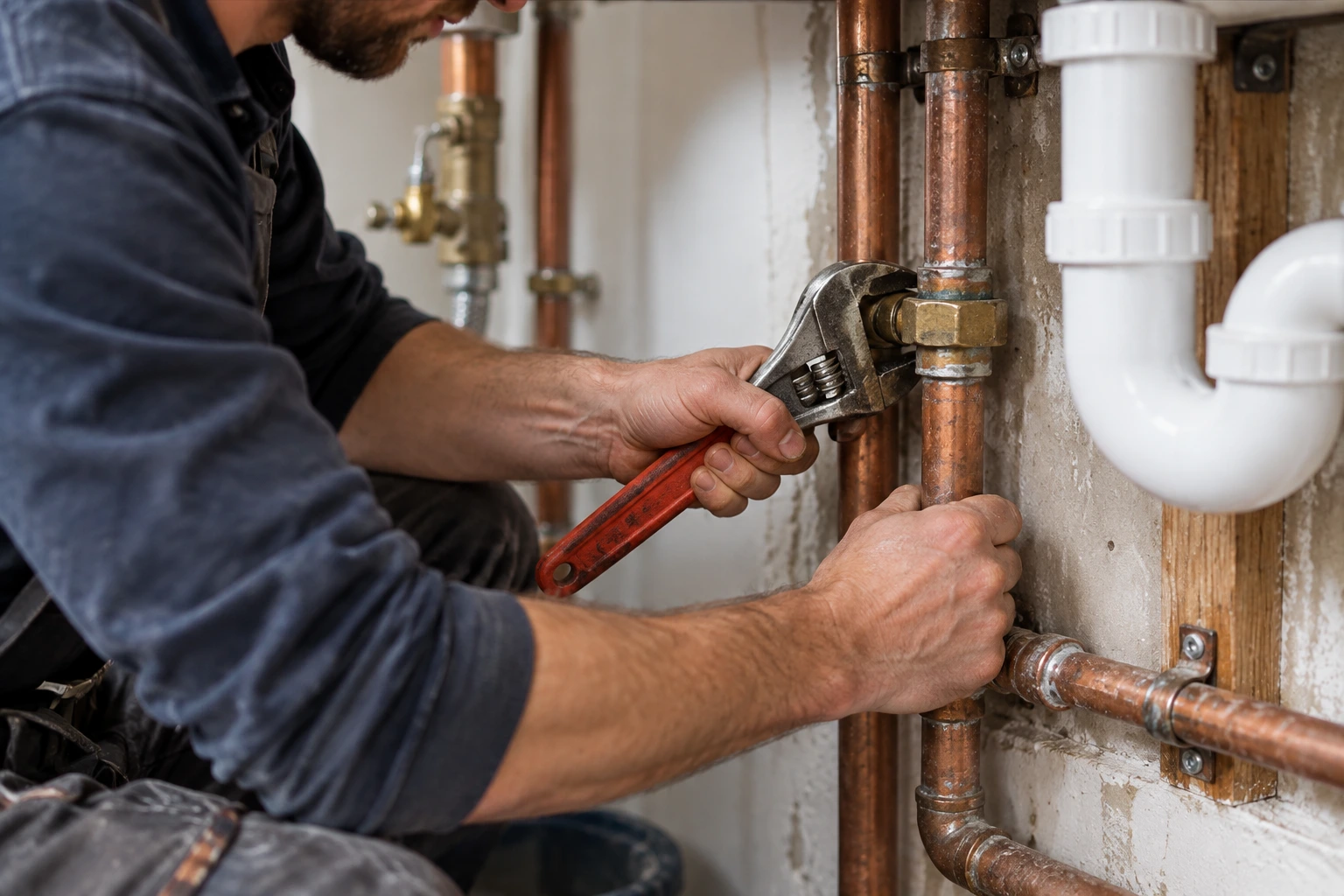
The first minutes at the house tell us whether we are looking at one fixture or the main. Conyers Plumbing Co will ask which fixtures still drain, whether anyone has poured chemicals, and whether you have found the shutoff. Those answers decide which cable comes off the truck first. Take the safe steps below, then wait for the crew.
If dirty water is coming up at a shower or floor drain, stop more water from entering the pipes. The main shutoff in many post-1960s slab houses sits in a closet, garage, or meter box. In Olde Town and Milstead crawl houses near the 1939 Rockdale County Courthouse on Main Street, the valve may be in the crawl or painted over. Tell us whether the valve moved, because a stuck stop changes the first minutes on site.
Before you pull food from a strainer, check whether other rooms are slow, because that one fact changes the job. A kitchen-only clog and a whole-house slowdown do not take the same cable. The checks below are safe and they give us a clearer picture when we arrive.
Chemical openers sit in a standing sink and can splash when we open the trap. Extra plunging on a toilet that shares a line can push sewage into a tub. Homemade cables from a roof can scratch pipe we then have to camera.
Clogged drain repair in Conyers splits three ways: kitchen branch, bath stack, or main. About 37 percent of houses here went up before 1980, so galvanized and cast iron still share work with later PVC. Sewer drain cleaning is the main-line version of the same visit. Hair, grease, paper, and roots each leave a different feel on the cable. The sections below match what the fixture is doing right now.
A standing kitchen sink stops dinner and sends water toward the cabinets. In Conyers houses with galvanized kitchen branches, food, grease, and rust scale share a small pipe, so the first overflow is rarely the first blockage. Drain cleaning for a clogged kitchen sink is evening work on these streets because that branch is short and tied to the dishwasher. When the kitchen sink drain that keeps backing up also slows the dishwasher, the clog sits past the trap.
Once on site, the trap comes off only if the stop is right there, then a cable runs toward the stack while we watch the dishwasher line. A jammed disposal is a separate repair, and garbage disposal repair is the right work when the blades, not the pipe, are the problem. A camera goes in when another cable would only punch a hole in the same grease. Summer cooking puts more grease in that line, so we say when the pipe needs a wider pass than a light snake.
Showers and bath sinks in Conyers houses often share a short run to the stack, so a clogged shower drain can slow the sink in the same room. Hair, soap, and toothpaste build a collar just past the strainer. A slow draining bathtub in a West Avenue slab home may also mean the line under the floor has a belly. School mornings pile up at that one bath, which is why the stall shows up on weekdays.
On site the strainer comes off, the trap is checked, and a cable runs toward the stack while the shower runs. If the tub still holds water, a camera from the vent or a cleanout is how we tell hair from a sag under the slab. We do not open the floor to guess. That camera pass is the difference between a bath clog and a line that needs more than a snake.
A toilet that will not drop puts water on the floor fast. Toilet clog repair in a Conyers bungalow is often paper plus a rough cast iron fitting. Who to call for a clogged toilet is this crew when more than one flush has failed and the tub starts to rise. In Milstead mill bungalows the closet bend can be original cast iron, so a plunger that feels firm may still push against scale.
A closet auger is first, and the toilet comes up only when the closet bend is the stop. If the main is the real problem, pulling the toilet without a camera just repeats the mess. After an overflow the bowl goes back on a new wax ring when the horn is sound. A cracked bowl is fixture work rather than another plunge.
When the lowest shower fills with dirty water, sewer drain cleaning in Conyers is a main line job, not a strainer job. A sewer line backing up into the shower, a gurgling toilet when the washer drains, and a floor drain backup in the garage usually share one clogged trunk. A drain that smells like sewage at that lowest shower is the same warning. Sewage on the floor is a house problem that should not wait.
Work starts at the yard cleanout or the roof vent so we can see whether a cable will open the main. If sewage is already on the floor, the visit follows our emergency plumbing path so the house is safe before we talk about roots. A camera follows when the cable brings back roots, scale, or nothing at all. That picture decides jetting versus repair.
Slow drains in every bath and the kitchen at once are not three separate clogs. Grease from the kitchen, hair from the showers, and soap from the laundry can meet in the main. A light snake then brings back a mix and the fixtures slow again. In mixed-era additions, a PVC kitchen tied into older cast iron is a common catch point.
We map which fixtures share a stack before we cable, because a bath-only snake will not fix a kitchen grease mat in the main. Hydro jetting is the wider pass when grease coats a long run. City water from Rockdale Water Resources is surface water from Big Haynes Creek, and cooking grease still sticks to scaled steel. You will see us test more than one room before we pack up.
Tree roots in the sewer line seek joints on older laterals, especially on lots with shade trees along Railroad Street. Why the drain clogs again after snaking is often a root mass that the cable poked a hole through. Camera or access before a second cable is the rule so we do not scratch the same pipe twice. Roots also crack pipe, and that is repair work, not another snake.
A main line camera inspection from the cleanout shows whether the next step is a heavier rooter service, hydro jetting, or a broken section. We do not run a second cable blind on a slab kitchen run, because that line may sit under the floor with no second access. That camera-before-another-cable habit is how we treat Conyers slab houses and crawl bungalows alike. Rain that saturates the yard can push more roots into those joints.
The choice on this visit is rarely a brand of machine. It is whether a cable will finish the clog, whether grease needs hydro jetting, or whether the line needs a camera and a repair. Kitchen versus bath versus main is the first split, because a bath hair clog and a main root mass do not take the same pass. In Conyers, galvanized and cast iron still share streets with later PVC, so the same symptom can hide two different pipes.
A drain snake is enough when the stop is hair, paper, or a soft grease plug in a branch we can access from a trap, toilet, or cleanout. Water runs after the cable so we can hear an open stack. If the fixture stays open and nearby fixtures stay quiet, we stop there. That is common in later PVC baths near the Horse Park edge. Rough pipe is still worth naming, because it is often why a clog returns.
Hydro jetting versus snaking matters on long grease lines and on mains that a cable only pokes through. Jetting scours the wall; a cable bores a hole. If the kitchen has been dumping grease for years, or the camera shows a coated main, hydro jetting in Conyers houses is the pass that lasts. Nearby fixtures stay protected, and the cleanout has to take the hose before that work starts. Jetting is not the first move on a brittle, unknown lateral.
A sewer camera inspection is the right next step when a cable brings back roots, when the clog returns, or when we cannot see an access. Main line camera inspection from a cleanout shows offsets, bellies, and breaks that no snake will fix. On slab houses the kitchen run may sit under the floor, so we camera that line rather than punch it twice. If the picture shows a broken pipe, drain work stops and repair talk starts. That order keeps us from scratching a line that already needs a section replaced.
Conyers streets are worked from 351 Gees Mill Business Pky N, and the older shutoff spots and builder cleanouts are part of the visit, not a surprise. Olde Town crawl houses and later slab plans do not hide the same access. That familiarity shortens the time between the doorbell and water moving again. One crew handles the drain and still glances at a dripping faucet or a hot water heater if those show up.
The truck carries closet augers, drum cables, and a camera, so the next tool is not a second trip. A simple bath clog starts with a cable you can see. A story that does not match the first pass starts with the camera. Same day drain cleaning is possible because those tools already ride along.
Twenty minutes on a camera is better than twenty minutes repeating a snake that already failed. Access comes first, then one thoughtful pass, then a picture if the water still sits there. Homeowners see the recording on site so the next choice is shared. A slab kitchen line and a crawl main get that same order.
After the line is open, every fixture we used gets a run of water, rims get wiped, and debris goes in a bag. Toilets sit true and rooms have a dry floor before the recap. Cooking or showering should not require moving our tools. If a wax ring or a trap washer was disturbed, it gets replaced before we go.
The first conversation usually takes a few minutes. Questions cover which fixtures are slow, whether sewage is on the floor, the decade of the house if you know it, and slab versus crawl. Whether the shutoff is already closed matters too. Those facts load the truck. A time window comes next, including nights when a main will not wait.
After that conversation a window is set, and we stay in touch if traffic on Interstate 20 delays the truck. Most visits begin with a walk-through of the fixtures you named. Floor protection and the cleanout come before any machine starts. If the backup is active, that walk-through is short and the cable comes out first.
The first look at traps and cleanouts often takes ten to fifteen minutes. Cables on a single branch may take another half hour, and a main takes longer. What the cable brought back gets explained before a second pass is offered. If a camera is next, that inspection is its own block of time with the picture on a screen. Nobody starts a second cable without that talk.
When the water runs, toilets get flushed, sinks get filled and dumped, and stacks get a listen. A dry floor and a quiet line are the last things you should see and hear. Kitchen versus bath versus main is recapped in plain words so you know what to watch this week. If a related repair is smarter than another snake, we say so and point you to that work.
Occasional hard freezes open joints in unheated garages, crawl runs, and exterior-wall lines, and debris catches there when the thaw comes. Hot, humid summers add cooling and watering demand that cycles tanks, fixtures, and mains, so kitchen grease sets up faster. Cecil sandy loam with a red sandy clay subsoil is well drained, yet slab houses still pick up small sags that hold soap. Those three loads are why a cable that opened a line last year may not finish the same drain this year.
A broken lateral that the camera can see belongs on pipe repair instead of another cable. A tank that is dumping sediment or failing belongs on water heater repair, not on the drain visit. After an overflow, a cracked bowl is fixture installation rather than more plunging.
The dishwasher sends a large burst of water into the same branch the sink uses. If grease and scale have narrowed that pipe, the extra water rises in the sink. Older galvanized kitchen lines in Conyers hold grease on the rough wall even after a light cable. We run the dishwasher after we open the line, and a camera is next if that test still fills the sink.
Clearing the stopper only removes hair you can see. The collar of soap and hair often sits just past the tailpiece, so the sink slows again the same week. Stop using that sink and see whether the shower in that room is also slow. On slab baths we cable from the strainer and then test the shower so we do not leave a shared line half open.
A slow draining bathtub on a slab can be hair at the shoe or a sag under the floor. We pull the strainer, cable toward the stack, and fill the tub to test. If the tub still stalls, a camera from a vent or cleanout shows a belly without opening the slab. You will see the test water before we talk about jetting or a repair.
If the toilet overflow shows up in the tub, the stop is likely in the shared line or the main, not in the bowl. Stop flushing and keep the tub from being used. Conyers Plumbing Co starts with a closet auger, then checks the lowest shower and any floor drain. The toilet comes up only when the closet bend is the true stop.
The first check is whether more than one fixture is involved, because a sewer line backing up into the shower is usually the main. We look at the lowest shower, toilets, and any garage floor drain, then find the cleanout. In Conyers that cleanout may be in the yard, the crawl, or at a stack. A cable tells us if the stop is soft, and a camera follows if roots come back.
Roots in the sewer line need more than a cable when the camera shows a mass at a joint, a crack, or a line that closes again in days. A cable can poke a hole through roots and leave the rest in the pipe. Pre-1980 laterals in Conyers are the ones we watch closest for this. We will not treat a second snake as a fix for a split pipe.
A kitchen cable often bores through grease and leaves the coating on the wall, so the opening closes as soon as more soap arrives. That is why the drain clogs again after snaking even when water ran at the end of the last visit. Scaled galvanized pipe makes it worse. We test with a dishwasher burst, and we camera if that burst still rises.
Snaking is the right first pass when the stop is paper or a single soft plug we can reach from a cleanout. Hydro jetting versus snaking tips toward jetting when the camera shows grease along a long main. On older Conyers laterals we camera first so we do not jet a brittle line. You will hear that choice before the hose comes off the truck.
Drain cleaning in Conyers is kitchen work, bath work, and main work, and the crew at Conyers Plumbing Co treats each as one section of the house. We cable when a cable will finish, camera when the line needs eyes, and say when repair is smarter than another snake. Later slab streets and older bungalows clog for different reasons, and that difference is the point of the visit. For the rest of what we handle, start at our homepage or the plumbing services list.
When a clogged drain returns, come back to the same cleanout rather than repeating a store snake. The next visit will look at kitchen versus bath versus main again and stop if the picture shows a break. That whole-house habit is how this crew works these streets, and it keeps a simple clog from turning into a cut floor.
Reach out to us for assistance.
Service ZIPs: 30012, 30013, 30094
From clogged drains and leaking pipes to water heaters, sewer lines, and emergency plumbing, our team provides reliable plumbing service for homes and businesses.